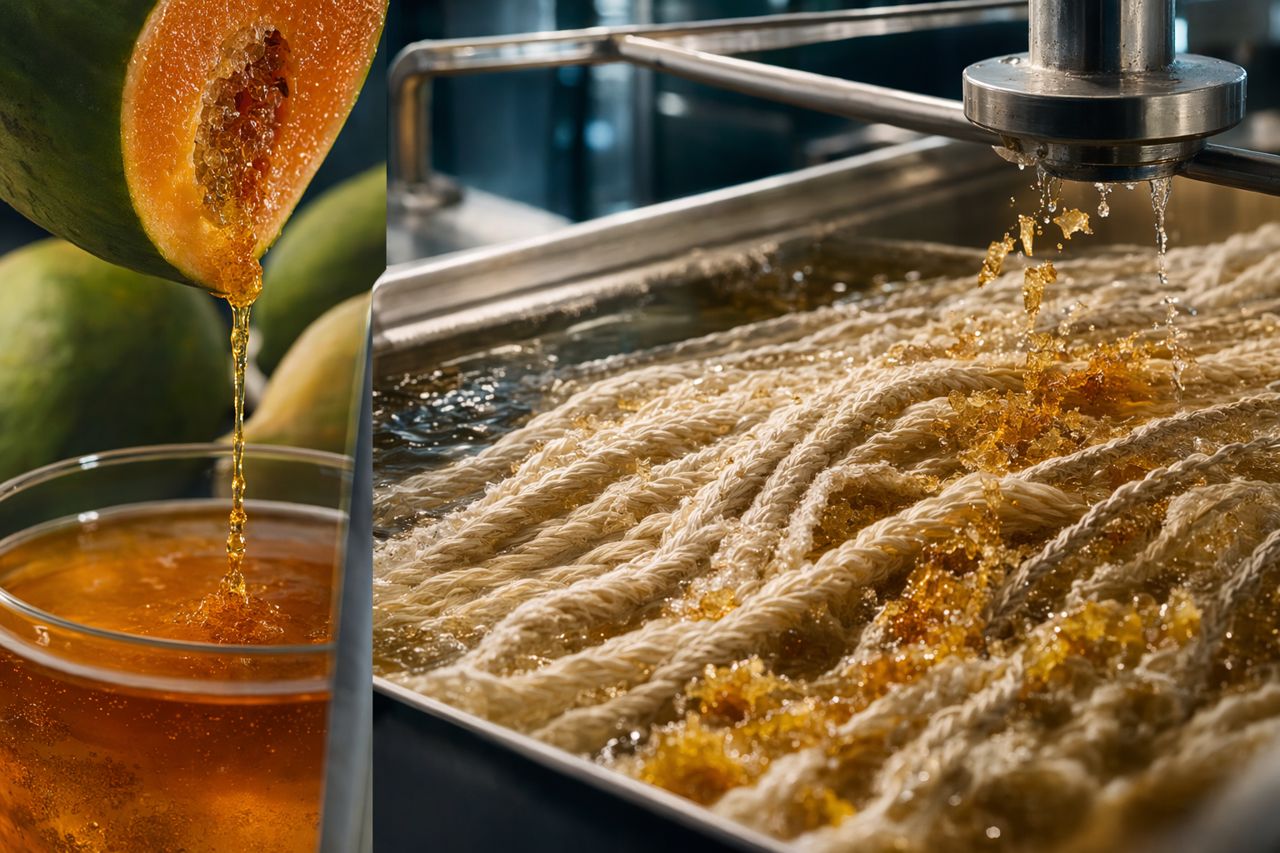
Papain for Textile Protein Removal
Papain is a plant-derived protease used where textile processors need controlled modification or removal of proteinaceous materials without defaulting to harsher chemical routes. In the right process window, it can support cleaner preparation, improved hand feel, more consistent finishing response, and reduced reliance on aggressive treatment conditions.
Papain Enzyme Solutions supplies Papain for B2B formulation, textile auxiliaries, and mill-scale evaluation programs where reproducibility, documentation, and practical handling matter.
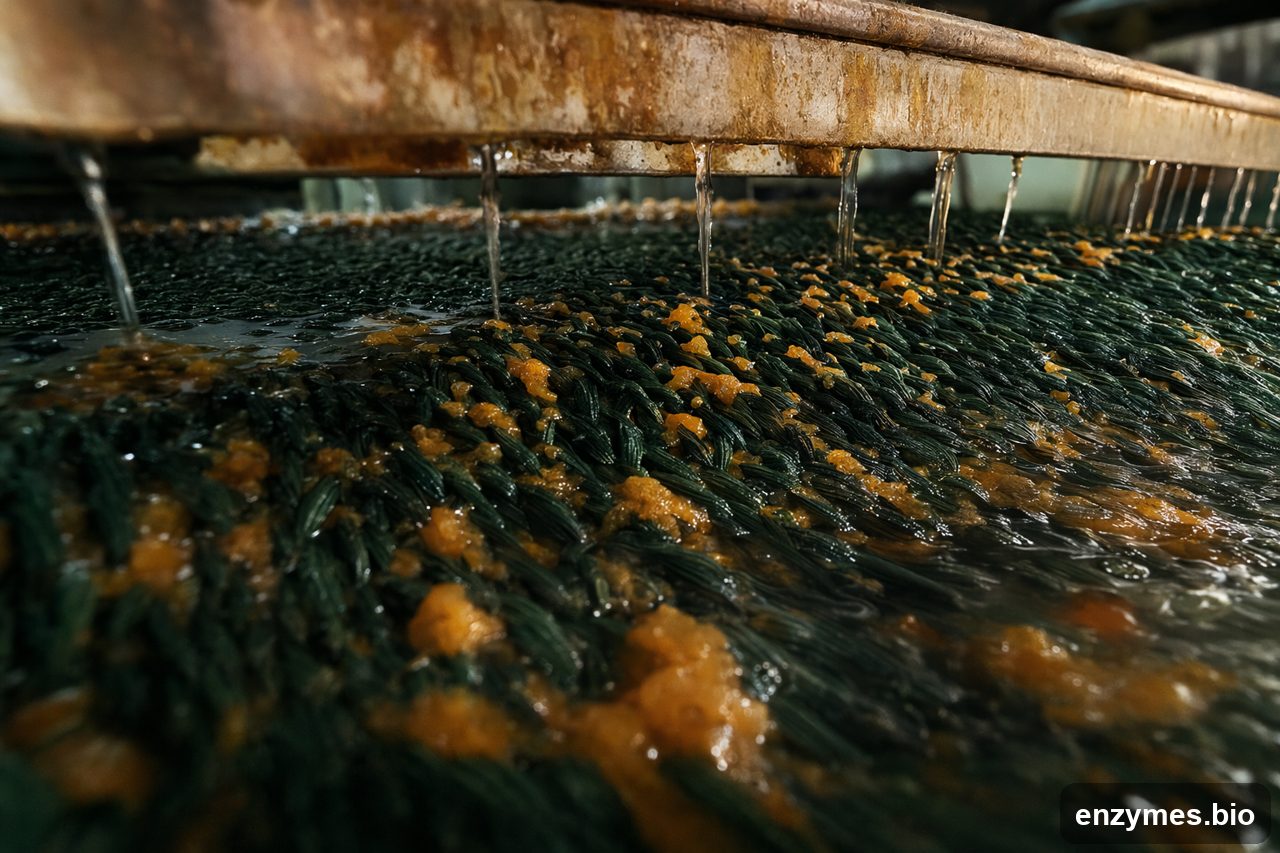
Where Papain Fits in Textile Processing
Papain is not a universal scouring agent. It is most relevant when the process challenge includes proteins or protein-like deposits that can be selectively hydrolyzed.
Typical evaluation areas include:
- Removal or weakening of protein-based residues from selected fabric systems
- Treatment of gelatin, casein, or related proteinaceous size components where present
- Controlled surface modification for protein fibers such as wool and silk
- Softening programs where mild proteolytic action can improve handle
- Preparation steps before dyeing, coating, printing, or finishing where residual protein interferes with uniformity
- Specialty cleaning or reprocessing workflows involving biological or protein-rich contaminants
Industrial Outcomes Buyers Care About
Cleaner preparation before finishing
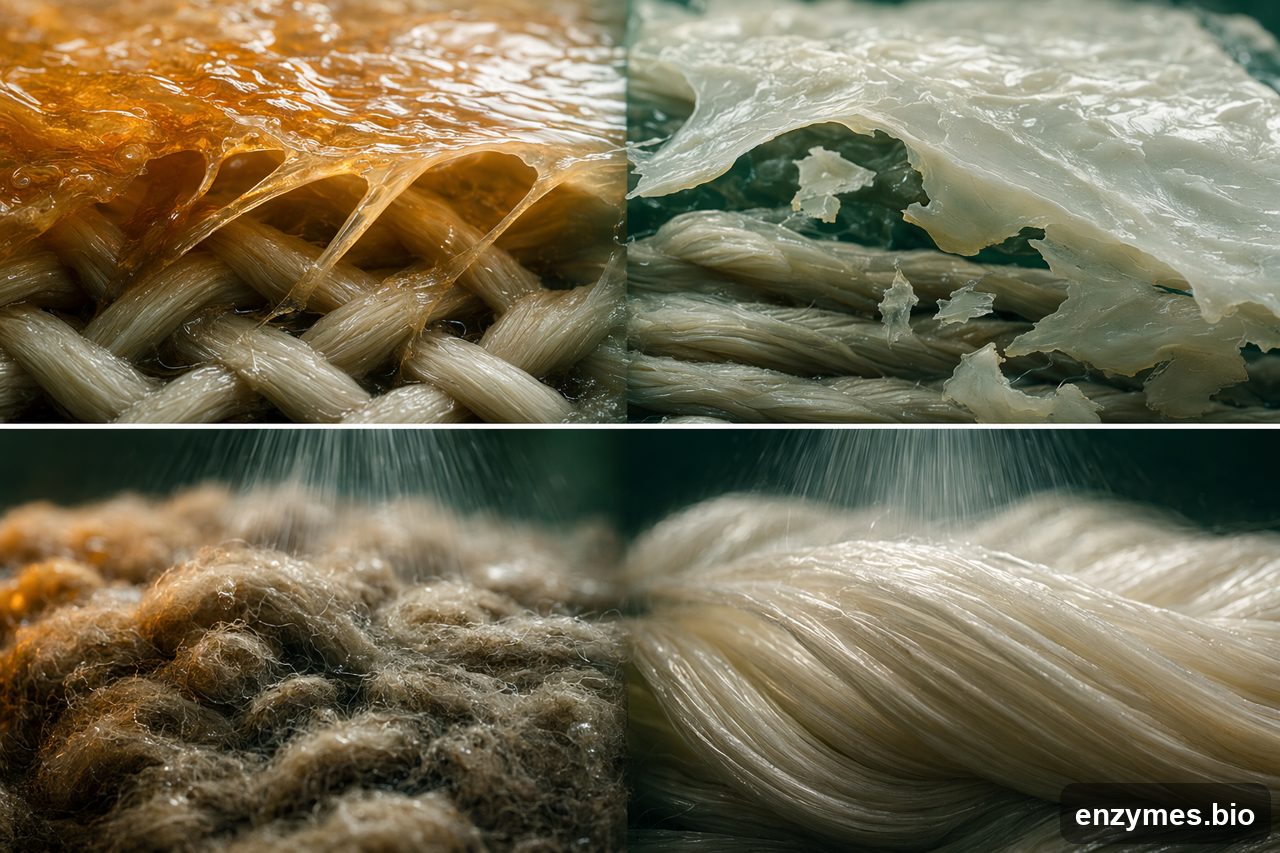
Protein residues can create uneven wet-out, inconsistent dye uptake, spotting, or variable finish adhesion. Papain can help break these materials into more removable fragments, improving the consistency of the preparation stage.
Softer, more refined hand feel
In selected wool, silk, and blended systems, controlled proteolysis may reduce surface harshness and support a smoother tactile profile. The goal is measured modification, not fiber damage.
Process efficiency with gentler chemistry
Papain may allow processors to reduce severity in certain preparation or cleaning steps. This can support lower chemical load, milder treatment conditions, and improved compatibility with sensitive substrates when the process is properly validated.
More consistent lots and fewer surprises
Textile operations depend on repeatability across fiber source, fabric construction, and finishing route. Papain is positioned for controlled formulation work, pilot trials, and procurement programs that require dependable supply and technical documentation.
Application Targets
| Textile challenge | How Papain can help | Key validation point |
|---|---|---|
| Protein-based size or residue | Hydrolyzes proteinaceous material for easier release | Confirm residue type before dosing strategy |
| Wool surface harshness | Supports controlled surface modification | Prevent excess fiber strength loss |
| Silk preparation or handle adjustment | Can assist selective protein modification | Protect luster, drape, and tensile properties |
| Uneven dyeing linked to protein deposits | Improves substrate preparation uniformity | Compare shade depth and levelness after treatment |
| Specialty laundering or rework | Breaks down protein-rich contamination | Validate fabric compatibility and rinse removal |
Formulation and Process Considerations
Papain performance depends on the interaction between enzyme, substrate, liquor chemistry, exposure time, and the intended stop point. Textile teams should evaluate it as part of a defined process map rather than as a drop-in chemical substitute.
Important considerations include:

- Fiber type and blend composition
- Presence and identity of proteinaceous residues
- Fabric construction and mechanical sensitivity
- Bath pH, temperature profile, and electrolyte load
- Surfactant, chelant, preservative, and auxiliary compatibility
- Required stop or deactivation step before downstream processing
- Rinsing efficiency and wastewater objectives
- Impact on tensile strength, pilling, shade, luster, and handle
Compatibility Guidance
Papain is a protease, so it must be handled carefully around valuable protein fibers. On wool and silk, the same chemistry that enables surface modification can also affect fiber integrity if exposure is excessive. Pilot work should define the narrowest effective process window that achieves the desired residue removal or hand-feel improvement while protecting the substrate.
For cotton, synthetics, and blends, Papain is usually considered when protein-based residues, coatings, contaminants, or blended protein components are part of the issue. It should not be assumed to replace cellulases, amylases, lipases, or oxidative processes in applications where the target material is not proteinaceous.
Supply Format and Procurement Fit
Papain Enzyme Solutions supports industrial buyers evaluating Papain for textile auxiliaries, mill trials, and specialty processing programs. Supply discussions typically cover:
- Target application and substrate type
- Desired handling format for formulation or direct process use
- Packaging preference and storage conditions
- Trial quantity, scale-up plan, and recurring demand
- Documentation needs for internal review and supplier qualification
- Regulatory, safety, and logistics requirements by destination market
Recommended Trial Approach
A structured textile trial should compare Papain treatment against the current process and an untreated control.
Suggested evaluation sequence:
- Identify the protein target or fiber-modification objective.
- Screen compatibility on representative fabric, yarn, or garment samples.
- Define exposure conditions and stop point.
- Measure residue removal, handle, wet-out, shade response, tensile retention, and visual appearance.
- Confirm rinsing and downstream finishing compatibility.
- Repeat on additional lots before scale-up.
Why Papain
Papain Enzyme Solutions focuses on Papain as an industrial material: botanical in origin, technical in use, and specified for real production decisions. We help formulation scientists, procurement teams, and process engineers connect enzyme selection with outcomes that matter on the textile floor: yield, consistency, sensory quality, and process efficiency.
Request a quote or get pricing
Tell us what substrate you are processing, what proteinaceous residue or surface effect you are targeting, and whether you need material for lab screening, pilot production, or recurring supply.