Formulating with Papain: Practical Considerations
Papain is a plant-derived protease valued for controlled protein modification across food, beverage, ingredient, and process applications. For formulation scientists, procurement teams, and process engineers, the question is not simply whether Papain works. The real question is whether it can be specified, handled, dosed, stopped, and scaled with enough consistency to protect yield, texture, clarity, flavor, and operating cost.
Papain Enzyme Solutions approaches Papain as an industrial input: botanical in origin, technical in use, and highly dependent on process context. The guidance below is designed to help teams translate Papain’s proteolytic performance into a formulation that behaves predictably from bench trials to production.
What Papain Contributes to a Formulation
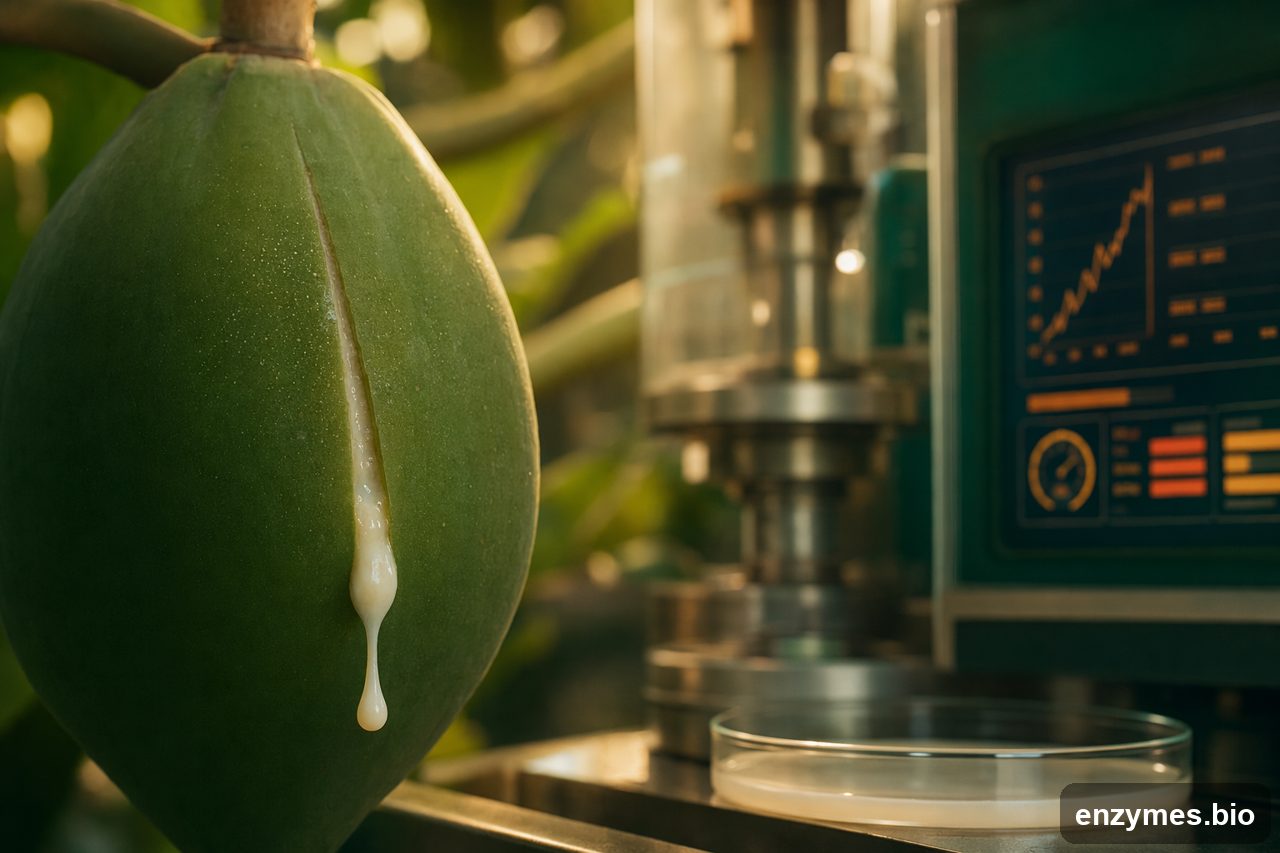
Papain cleaves peptide bonds in proteins, changing molecular size, texture, solubility, viscosity, and sensory perception. In practical terms, that can support:
- Tenderization in meat and seafood systems where controlled protein breakdown improves bite and process yield.
- Protein hydrolysis for ingredients where solubility, dispersibility, or digestibility-related positioning is important.
- Clarification support in beverage or extract systems where protein haze or suspended protein fractions must be reduced.
- Texture management in complex food matrices where protein structure influences mouthfeel and cutting behavior.
- Process efficiency where targeted hydrolysis reduces mechanical load, filtration resistance, or hold time.
Papain is not a one-setting ingredient. Its result depends on substrate type, moisture, pH, thermal exposure, contact time, and the way the reaction is stopped or slowed.
Start with the Substrate, Not the Enzyme
Papain performs differently against collagen-rich tissues, muscle proteins, plant proteins, dairy proteins, yeast-derived materials, and mixed extract streams. Before selecting a format or dosage range, define the substrate challenge clearly:
- What protein fraction needs to be modified?
- Is the desired effect surface-level, through-matrix, or fully hydrolytic?
- Are you targeting tenderness, clarity, viscosity reduction, solubility, or flavor release?
- What native inhibitors, salts, polyphenols, fats, or thermal history may limit access to protein sites?
- What is the acceptable endpoint before over-processing becomes a defect?
A well-defined substrate brief reduces trial cycles and helps align procurement specifications with the actual production outcome.
Core Formulation Variables
pH Window
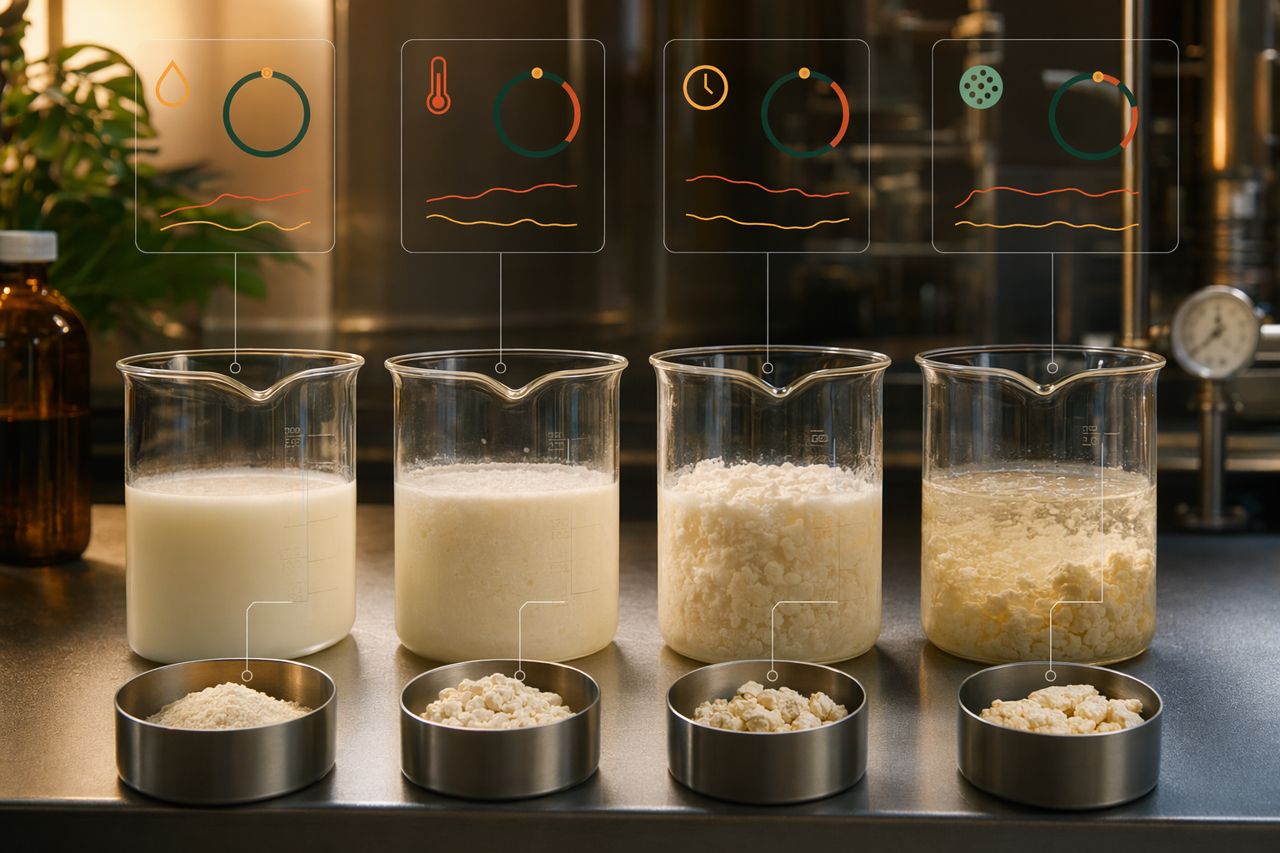
Papain is generally useful across a moderately broad pH range, but formulation performance changes as pH moves away from the preferred operating zone. For technical screening, evaluate Papain under the actual product pH rather than in a simplified laboratory buffer. Acidulants, phosphates, fermentation acids, brines, and extract solids can change the effective environment.
Practical considerations:
- Run trials at the intended in-process pH, not only final product pH.
- Watch for flavor shifts when hydrolysis occurs in acidic systems.
- Confirm whether pH adjustment is operationally acceptable at production scale.
Temperature Profile
Temperature influences reaction speed and stability. Higher temperatures can accelerate proteolysis, but excessive exposure can reduce effective performance or create uncontrolled endpoints. In industrial use, the relevant question is the total thermal history: addition point, ramp rate, hold time, and termination step.
Practical considerations:
- Add Papain at a point where mixing is strong and temperature is controlled.
- Avoid localized hot zones during make-down or injection.
- Validate the stop step with real production mass, not only small beakers.
Water Availability and Mixing
Papain requires access to hydrated protein surfaces. Low-moisture systems, high-fat matrices, viscous slurries, and dense brines can restrict distribution. Uneven enzyme distribution is a common cause of over-processing in one area and under-processing in another.
Practical considerations:
- Pre-disperse powders where appropriate to prevent clumping.
- Match carrier solubility to the production system.
- Confirm shear conditions, addition order, and mixing time before scale-up.
- In injected or tumbled systems, verify distribution across the full batch, not only surface samples.
Salt, Sugars, Polyphenols, and Process Additives
Papain is often used in real formulations that contain salts, sugars, gums, acids, flavors, preservatives, colors, antioxidants, and plant extract solids. These materials can affect hydration, protein accessibility, and perceived endpoint.
Practical considerations:
- Screen Papain in the complete formulation whenever possible.
- Introduce the enzyme before highly restrictive viscosity builders if dispersion becomes difficult.
- Confirm compatibility with oxidizing agents or strong reductive environments before commercial commitment.
Dosage Strategy: Build Around Endpoint Control
Papain dosage should be treated as a process variable, not a fixed ingredient line copied from another product. Establish a response curve using the real substrate and target process. The goal is to identify the operating band where the desired effect is achieved without sensory thinning, bitterness, mushy texture, filtration instability, or excess protein breakdown.
A practical screening design should compare:
- Low, medium, and high inclusion levels based on supplier guidance.
- Short and extended contact times.
- Intended process temperature and a realistic worst-case temperature.
- Normal pH and expected pH drift.
- Immediate processing versus production hold scenarios.
For procurement, ask for lot-to-lot consistency data tied to declared performance strength, but avoid relying on a generic paper specification alone. Application testing remains the more useful commercial control.
Stopping or Slowing the Reaction
Papain can continue working until conditions no longer support meaningful proteolysis. If the process requires a defined endpoint, the stop mechanism must be designed, validated, and documented.
Common control approaches include:
- Thermal treatment where product quality allows it.
- pH adjustment where compatible with the formulation.
- Process sequencing that limits contact time.
- Rapid chilling where it reliably slows the reaction enough for the application.
- Downstream separation or dilution where applicable.
Do not assume that the reaction stops when the batch leaves the mixer. If the product will sit in totes, tanks, marinades, or intermediate storage, validate the full hold profile.
Selecting the Right Papain Format
Papain can be supplied in formats designed for dry blending, liquid processing, controlled dispersion, or reduced-dust handling. The best choice depends on the plant environment as much as the formulation.
Powder Formats
Powders can offer straightforward storage, flexible weighing, and compatibility with dry premixes. They require attention to dust management, pre-blending, humidity exposure, and operator handling procedures.
Best fit:
- Dry ingredient systems.
- Premix operations.
- Plants with established powder handling controls.
- Processes where shelf stability and logistics simplicity matter.
Liquid or Dispersed Formats
Liquid systems can simplify metering and reduce dust exposure, but they require compatibility checks for preservatives, viscosity, microbial control, storage temperature, and dosing equipment.
Best fit:
- Inline dosing.
- Brines, marinades, slurries, and extraction processes.
- Sites prioritizing pumpable addition and rapid distribution.
Granulated or Carrier-Based Formats
Carrier-based forms may improve flow, handling, and blend uniformity. The carrier must be compatible with labeling, solubility, taste, color, and regulatory expectations.
Best fit:
- Large dry blends.
- Operations requiring improved flowability.
- Formulations where direct powder dispersion is problematic.
Specification Questions Procurement Should Ask
A Papain specification should do more than identify the enzyme. For B2B purchasing, request documentation that supports performance, safety, traceability, and operational fit.
Recommended specification points:
- Declared proteolytic strength and lot-to-lot control approach.
- Physical form, appearance, and carrier system.
- Solubility or dispersibility guidance for the intended process.
- Moisture control and storage recommendations.
- Microbiological limits suitable for the application.
- Heavy metal limits and contaminant controls.
- Country of origin and botanical sourcing traceability.
- Allergen, GMO, irradiation, and religious certification status where relevant.
- Shelf life and packaging configuration.
- Handling guidance for dust, inhalation exposure, and protective equipment.
For technical teams, the strongest procurement file pairs supplier documentation with internal application results on the actual substrate.
Application Notes by Use Case
Meat and Seafood Tenderization
Papain can improve tenderness when distribution and endpoint control are carefully managed. Over-processing can create a soft or pasty bite, especially at surfaces or in thinner cuts. Injection, tumbling, marinade viscosity, temperature, and hold time should be validated together.
Key controls:
- Distribution uniformity.
- Contact time before cooking or freezing.
- Surface versus internal texture.
- Salt and phosphate interactions.
- Cook yield and purge behavior.
Protein Hydrolysates
In hydrolysate production, Papain can help reduce protein size and improve solubility. The challenge is balancing functional improvement against bitterness, color changes, viscosity shifts, and downstream filtration or drying behavior.
Key controls:
- Degree of hydrolysis target defined by application testing.
- Flavor impact at endpoint.
- Filtration load and solids recovery.
- Heat treatment compatibility.
- Final powder flow and reconstitution if spray dried.
Beverage, Extract, and Clarification Systems
Papain can support reduction of protein-associated haze or suspended fractions in selected beverage and extract processes. Matrix complexity matters: polyphenols, sugars, minerals, and heat history can alter the outcome.
Key controls:
- Addition point relative to extraction and filtration.
- Turbidity reduction over time.
- Sediment formation during storage.
- Flavor neutrality.
- Compatibility with fining or filtration aids.
Bakery, Flavor, and Specialty Food Systems
Papain may be used where controlled protein modification affects dough handling, flavor release, or texture. Small changes in contact time and thermal exposure can produce visible differences in structure.
Key controls:
- Mixing order.
- Dough or slurry rest time.
- Texture after thermal processing.
- Sensory impact.
- Interaction with other enzymes or functional proteins.
Scale-Up Risks to Control Early
Bench trials often overstate predictability because they are well mixed, closely timed, and easy to stop. Production introduces delays, larger thermal gradients, dead zones, pump shear, and longer hold periods.
Before scale-up, document:
- Exact addition point and make-down procedure.
- Batch temperature at addition and during hold.
- Mixing speed, geometry, and minimum mixing time.
- Maximum permitted contact time before stop step.
- Sampling locations and acceptance criteria.
- Corrective action if endpoint is missed.
- Cleaning considerations for enzyme-contact surfaces.
- Operator safety and dust control requirements.
The best Papain programs treat the enzyme as both an ingredient and a process step.
Troubleshooting Common Papain Formulation Issues
Result is too weak
Possible causes include insufficient dispersion, low accessible protein, incompatible pH, low process temperature, short contact time, or supplier strength mismatch. Confirm distribution before increasing dosage.
Texture becomes too soft
Contact time, dosage, or temperature may be too aggressive. Review hold periods, surface exposure, and whether the reaction continues after the expected endpoint.
Bitterness increases
Excessive hydrolysis can expose bitter peptides in some protein systems. Reduce contact intensity, adjust the stop point, or evaluate blending and flavor management strategies.
Batch-to-batch variation appears
Look at substrate variability first: protein source, age, heat history, pH, salt, and solids content. Then compare enzyme lot documentation and storage conditions.
Powder does not disperse cleanly
Review addition order, water temperature, shear, carrier compatibility, and premix technique. Avoid adding powder directly into highly viscous or poorly agitated zones.
Practical Trial Plan
A disciplined Papain trial should produce decisions, not just samples.
- Define the commercial endpoint in measurable product terms: tenderness, clarity, viscosity, yield, filtration rate, or sensory target.
- Select the Papain format that matches plant handling and formulation constraints.
- Run a small matrix of dosage, contact time, temperature, and pH using the real substrate.
- Include a no-enzyme control and a process blank where applicable.
- Measure immediate and delayed effects after realistic holding or storage.
- Confirm the stop or slow-down mechanism.
- Repeat with a second raw material lot before locking the specification.
- Translate the best condition into a production addition procedure.
Request Papain Pricing or a Formulation Review
If you are building a Papain specification, comparing formats, or preparing a plant trial, send the process context and target outcome. Papain Enzyme Solutions can help align Papain form, documentation, and commercial supply expectations with your application.
Prefer a direct technical conversation? Use the same form and note whether you need get pricing, sample planning, documentation review, or scale-up support.