Common Industrial Uses of Papain
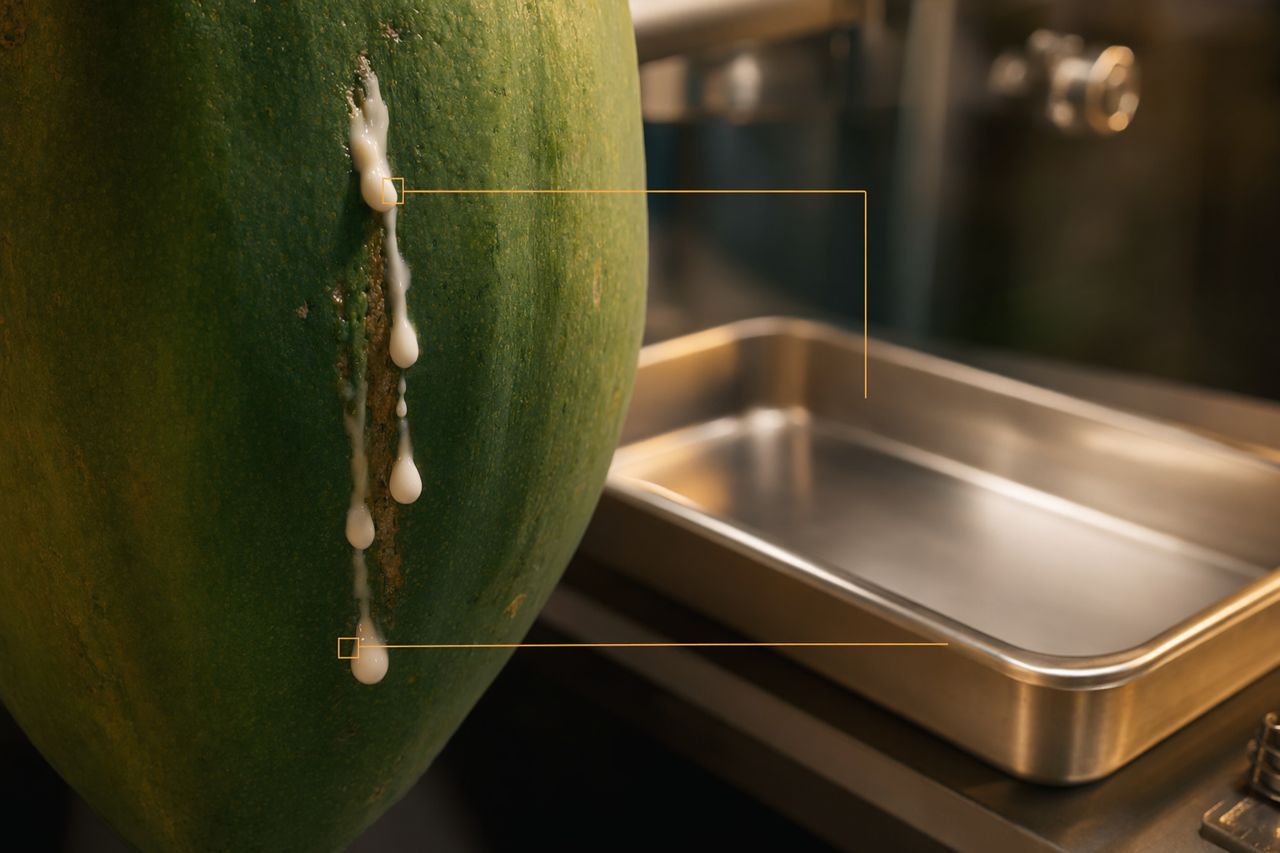
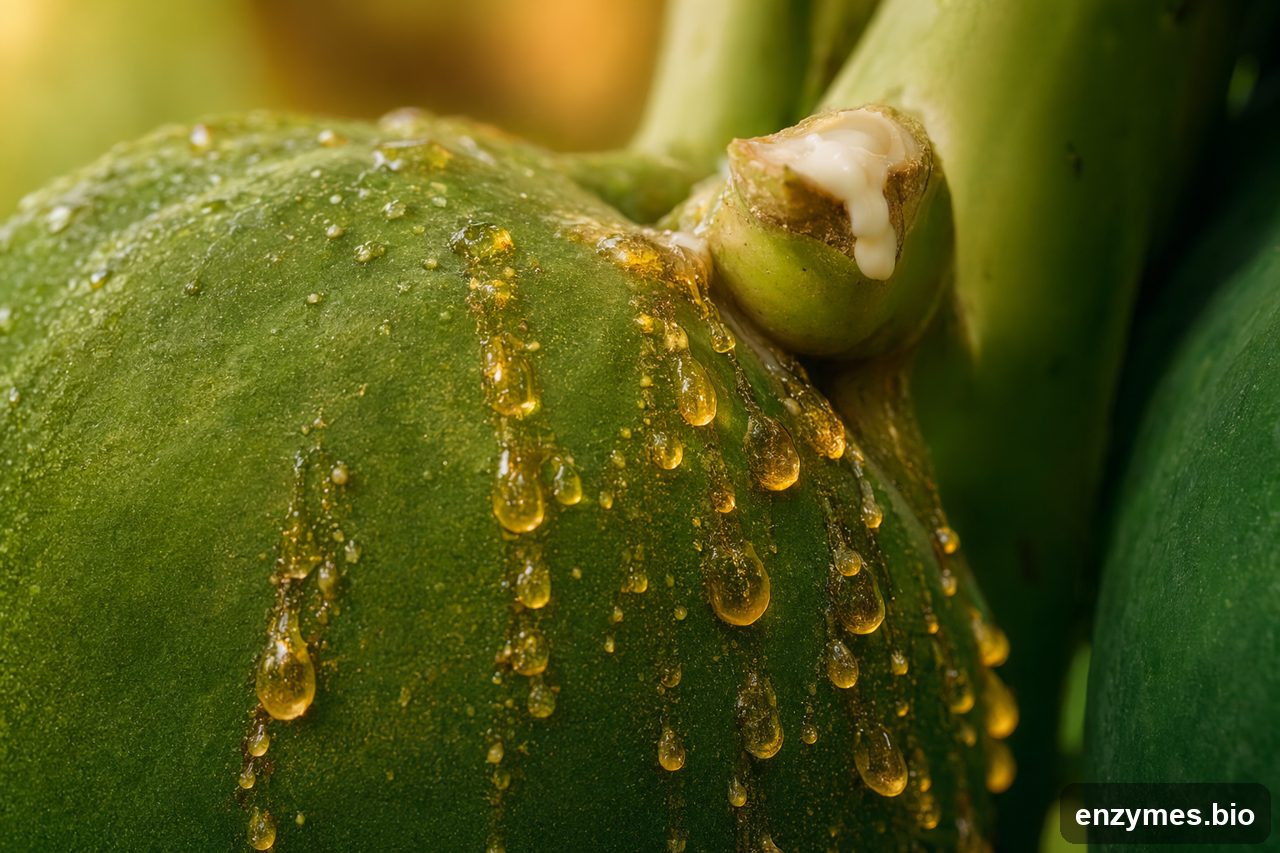
Papain is a plant-derived cysteine protease obtained from papaya latex. For industrial buyers, its value is practical: it can modify protein structure in ways that improve tenderness, clarity, texture, extraction, surface feel, and downstream process efficiency.
Papain Enzyme Solutions frames Papain as a process tool, not a commodity line item. The right grade, carrier system, granulation, solubility profile, and handling format can determine whether Papain delivers a clean sensory result or creates variability batch to batch.
Why Papain is used industrially
Papain is selected when manufacturers need controlled protein breakdown without excessively harsh processing. Its appeal comes from four operating advantages:
- Broad protein compatibility: useful across muscle proteins, collagen-rich materials, cereal proteins, plant proteins, and hide structures.
- Practical process integration: can be introduced into marinades, aqueous blends, dry premixes, soaking systems, or controlled treatment stages.
- Texture and yield contribution: supports tenderization, softening, extraction, and hydrolysis where protein structure is limiting performance.
- Cleaner downstream behavior: when applied correctly, Papain can reduce mechanical severity, shorten conditioning steps, or improve consistency before filtration, drying, or finishing.
1. Meat tenderization and prepared foods
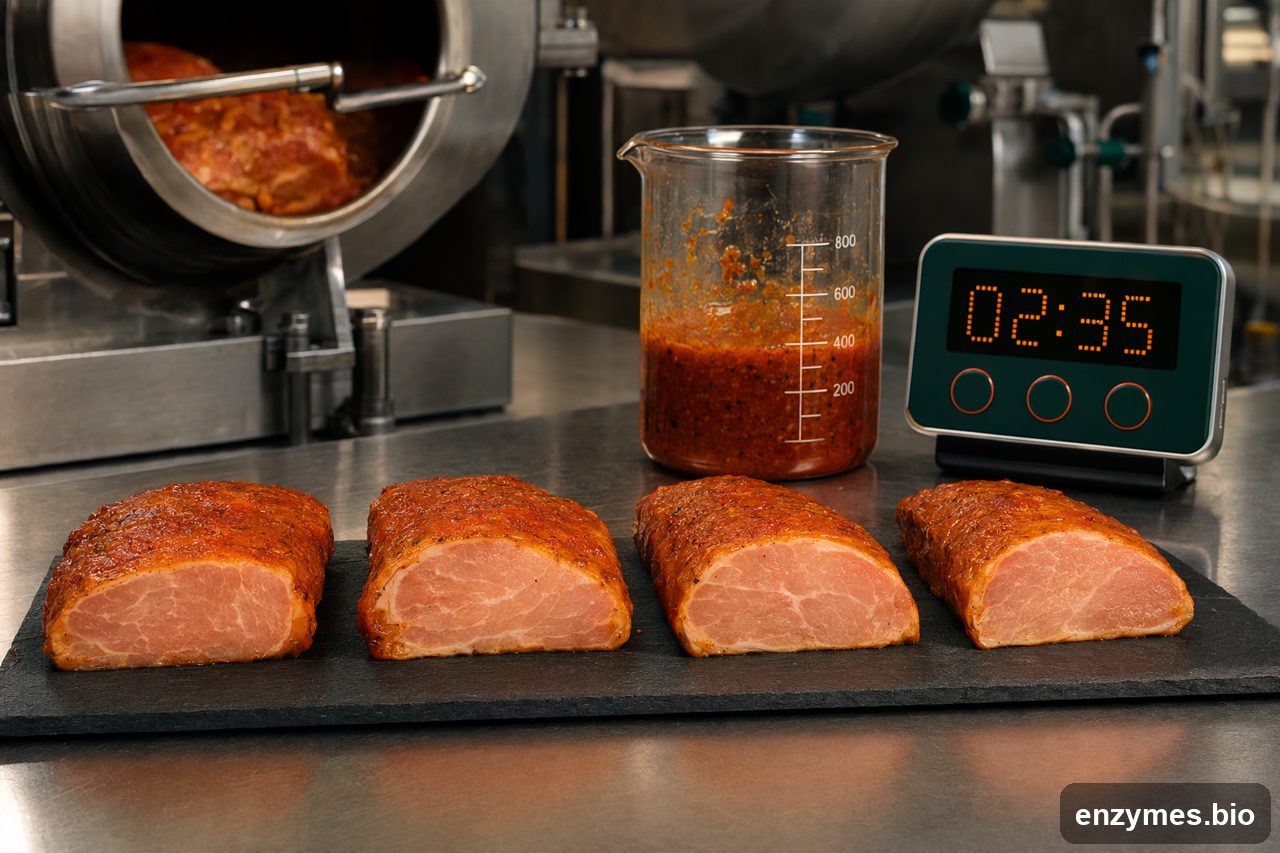
Papain is widely used in meat systems because it can soften connective and muscle protein structures. It is common in marinades, injection brines, topical tenderizers, seasoning blends, and prepared protein products.
Where it helps
- Beef, pork, poultry, and value-added meat preparations
- Marinades and tumbling systems
- Dry rubs and tenderizing seasoning blends
- Reformed or portion-controlled products
- Ready-meal proteins where bite consistency matters
What B2B teams evaluate
Formulators typically assess Papain against tenderness target, purge control, bite quality, flavor release, and process dwell time. Over-treatment can create mushy texture, so grade selection and process control matter. Procurement teams should specify the physical format and blend compatibility, especially where Papain must distribute evenly through salt, phosphate, spice, sugar, or starch systems.
2. Brewing, beverage, and protein haze control
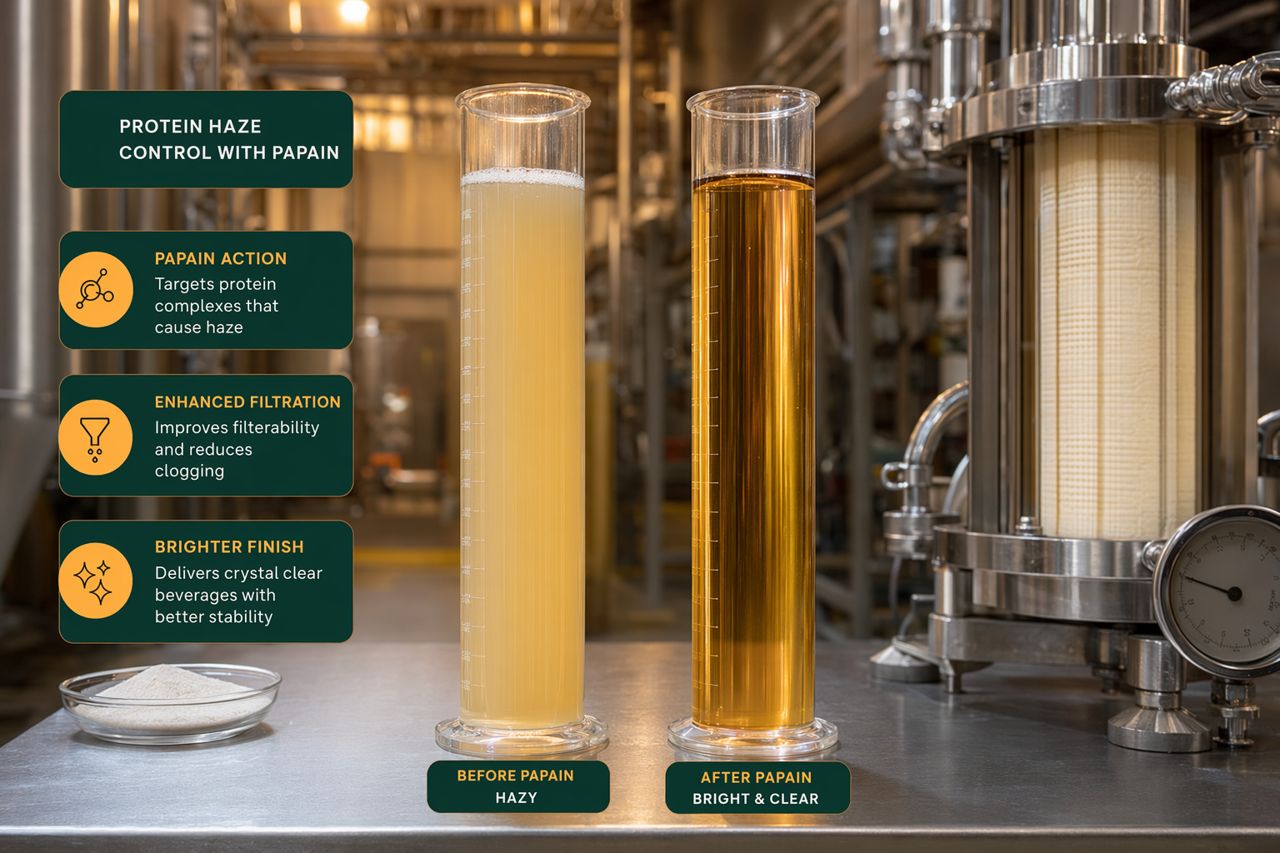
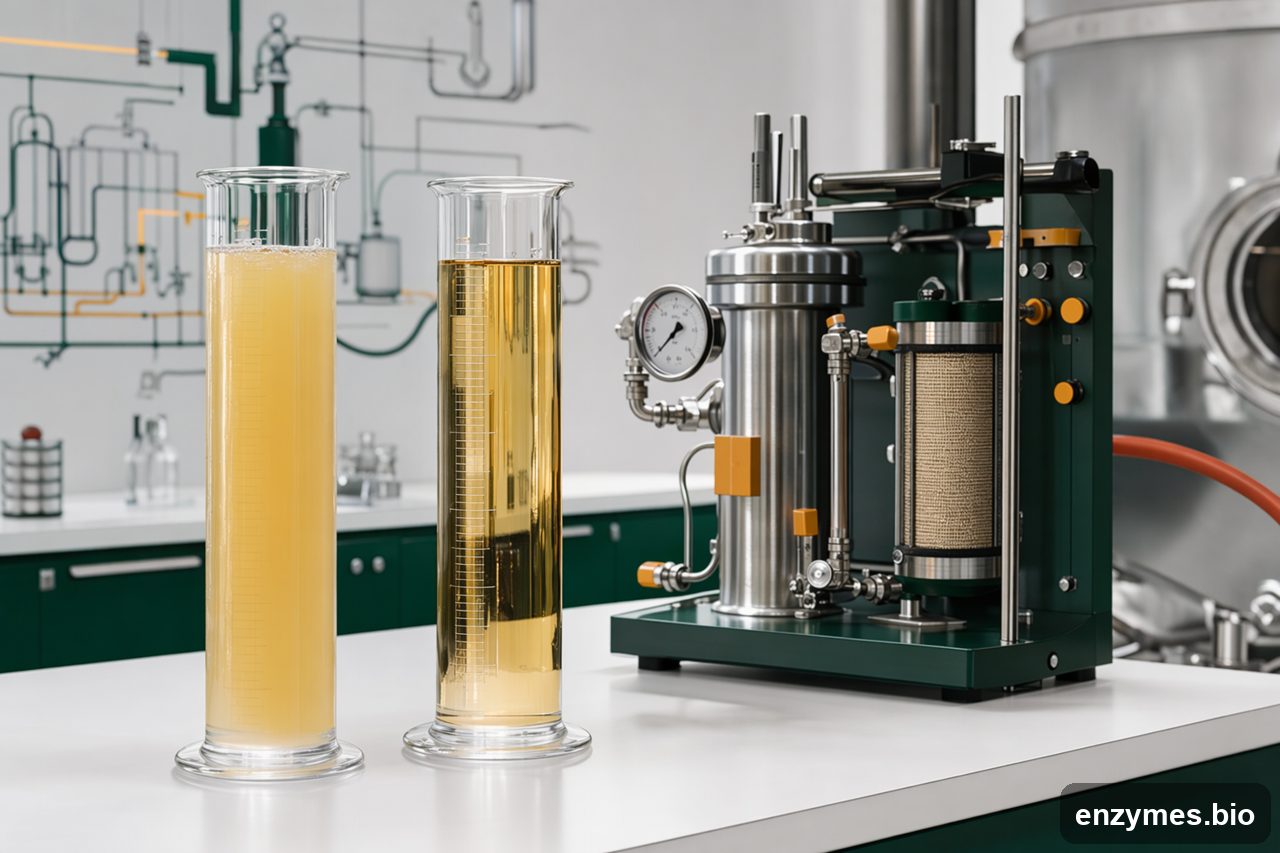
In beverage manufacturing, Papain is used to manage protein-related haze and improve visual stability. In brewing, it can help reduce the protein fractions associated with chill haze, supporting a cleaner appearance after packaging and cold storage.
Typical use cases
- Beer and malt beverages
- Protein-sensitive beverage bases
- Botanical or cereal-derived drinks requiring visual stability
- Filtration support where protein load affects throughput
Key formulation concerns
Beverage teams focus on clarity, foam behavior, flavor neutrality, filtration performance, and stability over shelf life. Papain selection should consider solubility, carrier impact, residual sensory contribution, and compatibility with existing stabilization steps.
3. Bakery and dough conditioning
Papain can be used to adjust gluten strength and dough handling in selected bakery applications. It is not a universal dough improver; it is a targeted protease for systems where controlled softening or extensibility is desired.
Useful outcomes
- Reduced dough resistance in certain cracker, biscuit, and wafer systems
- Improved sheeting or forming behavior
- More consistent bite in crisp or laminated products
- Support for processability when flour protein varies
Process note
Because Papain modifies protein networks, small formulation changes can be meaningful. Teams should validate it in the full process, including mixing order, hydration, rest time, forming, thermal treatment, and finished-product texture.
4. Protein hydrolysates, seasonings, and flavor systems
Papain is used in protein hydrolysis to produce ingredients with improved solubility, altered viscosity, or savory flavor contribution. It can support the manufacture of hydrolyzed plant proteins, animal-derived extracts, collagen-related ingredients, yeast-adjacent flavor systems, and nutritional bases.
Industrial benefits
- Improved extraction from protein-rich raw materials
- Controlled reduction in molecular size
- Better dispersibility in liquid or dry blends
- Development of savory, broth-like, or umami-supporting profiles
- Process support before filtration, concentration, or drying
Buyer considerations
For hydrolysate producers, Papain grade selection should be aligned with raw material variability, desired hydrolysis profile, bitterness management, thermal stop step, and downstream drying behavior. A clean technical specification is essential because minor differences in carrier, moisture control, and particle behavior can influence blend performance.
5. Leather processing and bating
Papain has long-standing relevance in leather processing, particularly where controlled removal of non-structural proteins supports softness, grain quality, and uniform finishing. It may be used as part of bating or softening systems depending on the tannery process design.
Performance targets
- More uniform hide preparation
- Softer hand feel
- Improved grain smoothness
- Reduced harshness in mechanical processing
- Better consistency before finishing operations
Operational fit
Leather processors typically evaluate Papain through softness, grain cleanliness, penetration, compatibility with auxiliaries, and wastewater profile. The enzyme should be matched to process pH, temperature, soak conditions, and the desired article type.
6. Textile and fiber treatment
Papain can support selected textile and fiber treatments where proteinaceous materials or surface characteristics need modification. It may be considered for wool, silk, blends containing protein fibers, or specialty finishing operations.
Potential advantages
- Gentler surface modification than aggressive chemical-only routes
- Improved hand feel in specific fiber systems
- Support for desizing or cleaning strategies where protein soils are present
- More controlled finishing when process parameters are well defined
Textile use is highly application-specific. Lab validation should include fiber strength, shade impact, handle, rinse behavior, and compatibility with finishing chemistry.
7. Pet food, aquafeed, and animal nutrition ingredients
Papain may be used during ingredient processing to improve protein digestibility, modify viscosity, or produce hydrolyzed protein materials for feed applications. It can be especially relevant where processors are working with animal by-products, fish materials, poultry proteins, collagen-rich substrates, or plant protein streams.
Commercial reasons to consider Papain
- More consistent hydrolysis of variable raw materials
- Improved slurry handling before drying
- Support for palatability systems and digestibility positioning
- Better integration of protein fractions into dry or wet formats
Feed and pet food teams should align Papain use with regulatory category, species target, label requirements, thermal processing, and finished-feed stability.
Selecting a Papain grade for industrial use
A Papain specification should do more than identify the enzyme name. For industrial implementation, buyers should clarify:
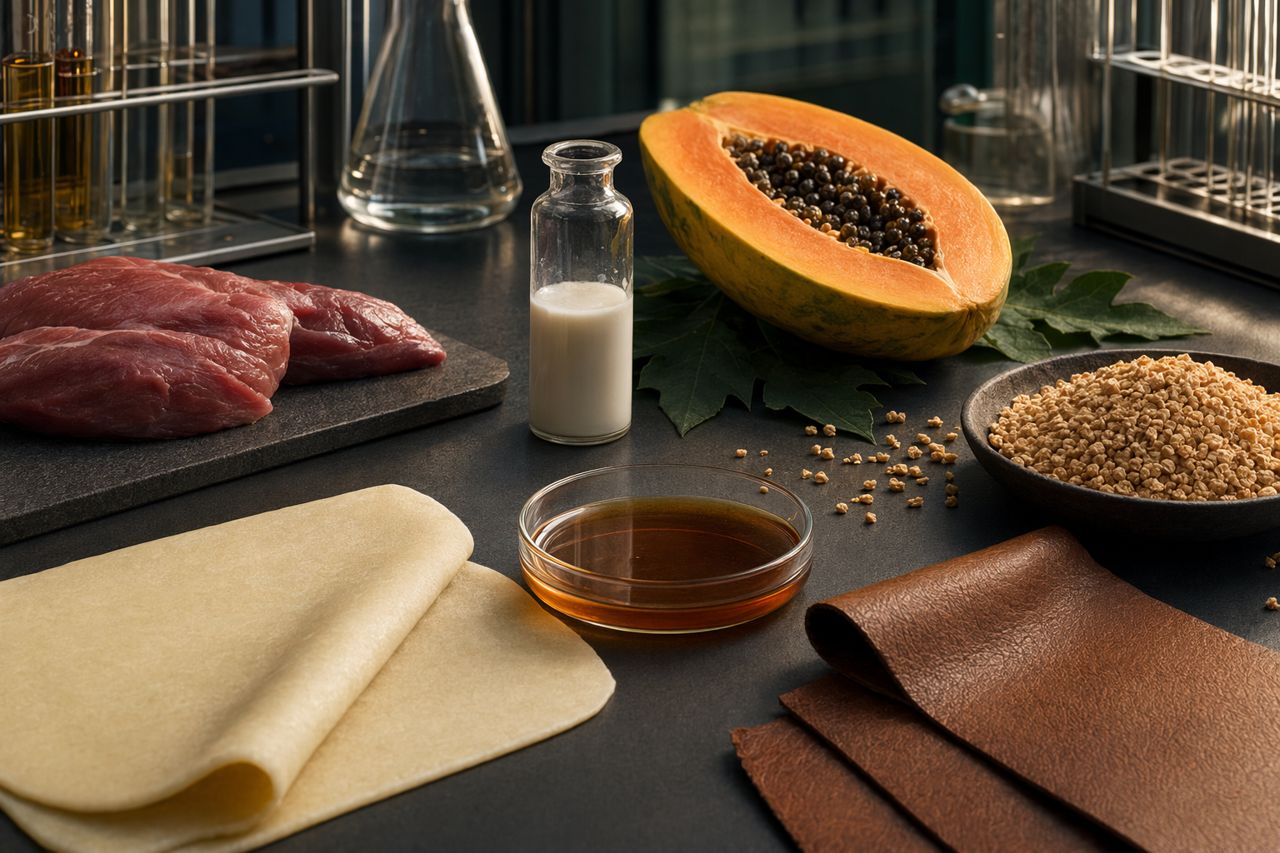
- Application: meat, beverage, bakery, hydrolysate, leather, textile, or feed
- Format: powder, granule, blend, or water-dispersible preparation
- Carrier system: compatibility with salts, sugars, starches, gums, minerals, or processing aids
- Solubility and dispersion: behavior in the actual process stream, not only in water
- Sensory profile: odor, color, and taste contribution where relevant
- Thermal process: when Papain should work and when it should be stopped
- Packaging: moisture protection, dust control, handling safety, and plant storage conditions
- Documentation: allergen position, food-grade status where applicable, origin, technical data, and regulatory support
Practical formulation guidance
Papain performs best when it is treated as a controlled process variable. Before scale-up, define the substrate, contact time, processing temperature, pH environment, mixing intensity, and the stop condition. Then evaluate performance through the outcomes that matter commercially: tenderness, clarity, filtration rate, dough behavior, hydrolysate profile, softness, yield, sensory quality, and batch reproducibility.
A structured pilot trial should compare untreated control, current process standard, and the proposed Papain condition. This gives formulation, procurement, and production teams a shared basis for deciding whether the enzyme delivers enough value to justify adoption.
Request pricing or technical fit guidance
If you are evaluating Papain for a product line, processing plant, or ingredient system, send the application details below. Papain Enzyme Solutions can help match the Papain format to your substrate, process conditions, documentation needs, and commercial volume.