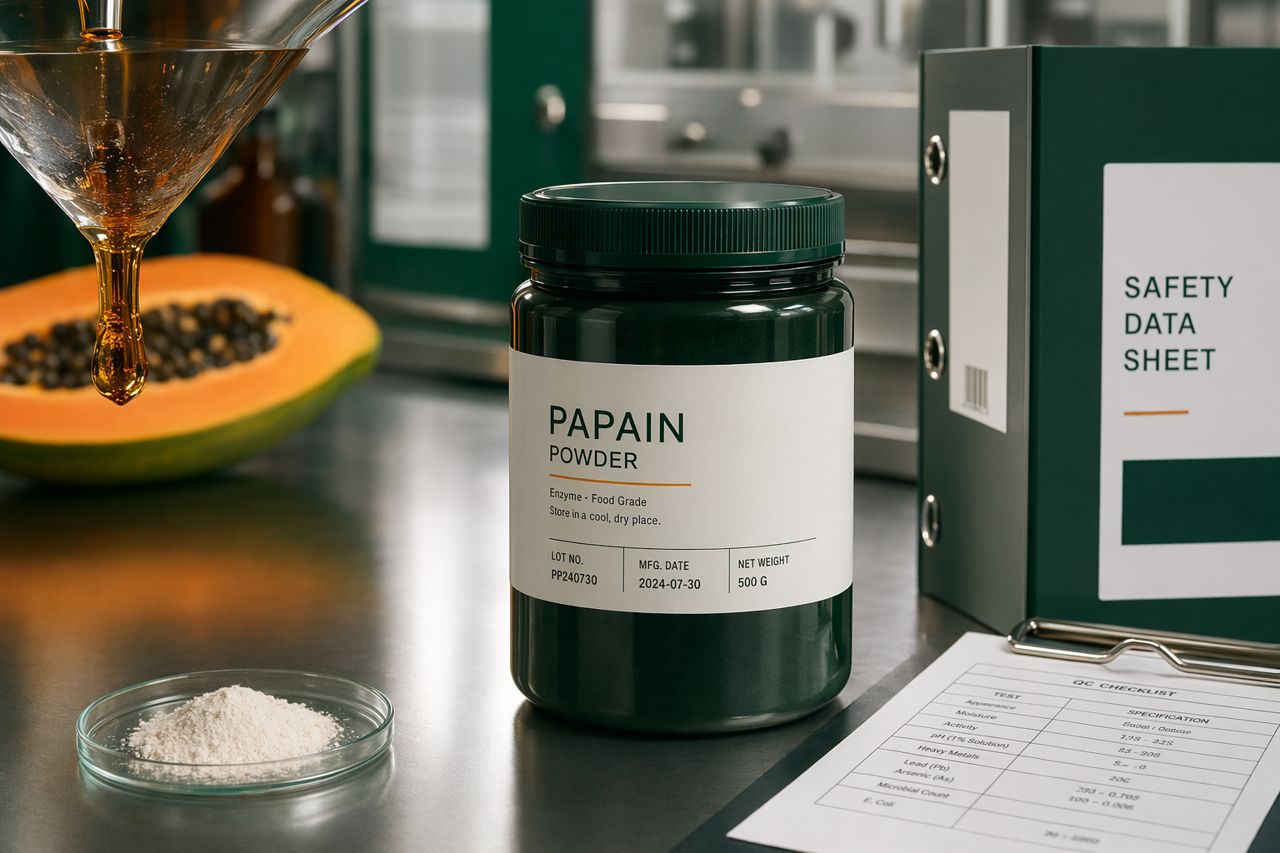
Papain safety and labeling considerations
Papain is a plant-derived protease valued for its ability to modify protein structure in food, beverage, nutraceutical, cosmetic, feed, and technical processing applications. Because it is an active enzyme material, procurement and QA teams should evaluate Papain not only on process performance, but also on safety documentation, handling conditions, intended market, and downstream labeling expectations.
This page is a practical planning guide for industrial buyers. It is not legal advice. Final label language and hazard communication should be confirmed against the destination market, product format, concentration, and your internal regulatory review.
Why Papain requires careful safety review
Papain is typically sourced from papaya latex and processed into powder, granule, or liquid formats. As with many proteolytic enzymes, the main safety questions are not limited to ingestion or end-use exposure. They often center on occupational handling, dust control, respiratory sensitization potential, skin and eye contact, and whether the enzyme remains active in the final product.
For B2B purchasing, the essential question is simple: does the Papain specification match the application, the plant environment, and the labeling obligations of the finished good?
Key safety topics for procurement and QA
1. Occupational exposure and dust management
Powdered enzyme materials can generate airborne particulates during weighing, charging, blending, repacking, or cleanup. For Papain, respiratory exposure should be treated seriously, especially where operators repeatedly handle dry material.
Practical controls may include:
- Closed charging or low-dust transfer where feasible
- Local exhaust ventilation at weighing and blending points
- Dust-minimizing packaging, liners, and dispensing practices
- Appropriate respiratory protection based on site risk assessment
- Gloves, protective eyewear, and protective clothing for routine handling
- Wet-cleaning or validated dust-control procedures instead of dry sweeping
- Operator training for enzyme handling, spill response, and hygiene practices
Granulated or liquid Papain formats may reduce dust concerns, but they do not remove the need for a current safety review.
2. Skin, eye, and mucous membrane contact
Papain is proteolytic by nature. Direct contact with concentrated material can irritate skin, eyes, and mucous membranes. Splash and dust exposure should be minimized through engineering controls, packaging design, personal protective equipment, and well-defined operating procedures.
For facilities that repackage or formulate Papain into intermediate blends, QA and EHS teams should review whether the blend changes hazard classification, handling instructions, or label statements.
3. Allergen and sensitivity considerations
Papain is derived from papaya latex. Some organizations also assess potential cross-sensitivity concerns related to papaya, latex-associated sensitivities, or enzyme protein exposure. Requirements vary by region and by product category, so do not assume a universal allergen position.

For customer-facing specifications, request clear supplier declarations covering botanical source, processing aids where relevant, allergen position, and any market-specific declarations required for your application.
4. Food, supplement, and processing-aid labeling
In food and beverage processing, Papain may be used as a processing aid or functional ingredient depending on the application, residual activity, market, and finished product positioning. Labeling treatment can differ significantly across jurisdictions.
Questions to resolve before commercialization:
- Is Papain present in the final product or inactivated/removed during processing?
- Is it used for protein hydrolysis, tenderization, clarification, flavor development, or another functional purpose?
- Does the finished product make claims affected by enzyme use?
- Does the market require enzyme declaration, processing-aid assessment, or specific naming conventions?
- Are there category rules for meat, beer, bakery, supplements, cosmetics, or feed?
- Are there customer standards that go beyond legal minimums?
For regulated claims, export products, or private-label programs, align early with regulatory, QA, and the brand owner before finalizing the Papain grade.
Documentation to request from a Papain supplier
A procurement-ready Papain package should include more than a price and lead time. Ask for documentation that supports qualification, receiving inspection, and customer audits.
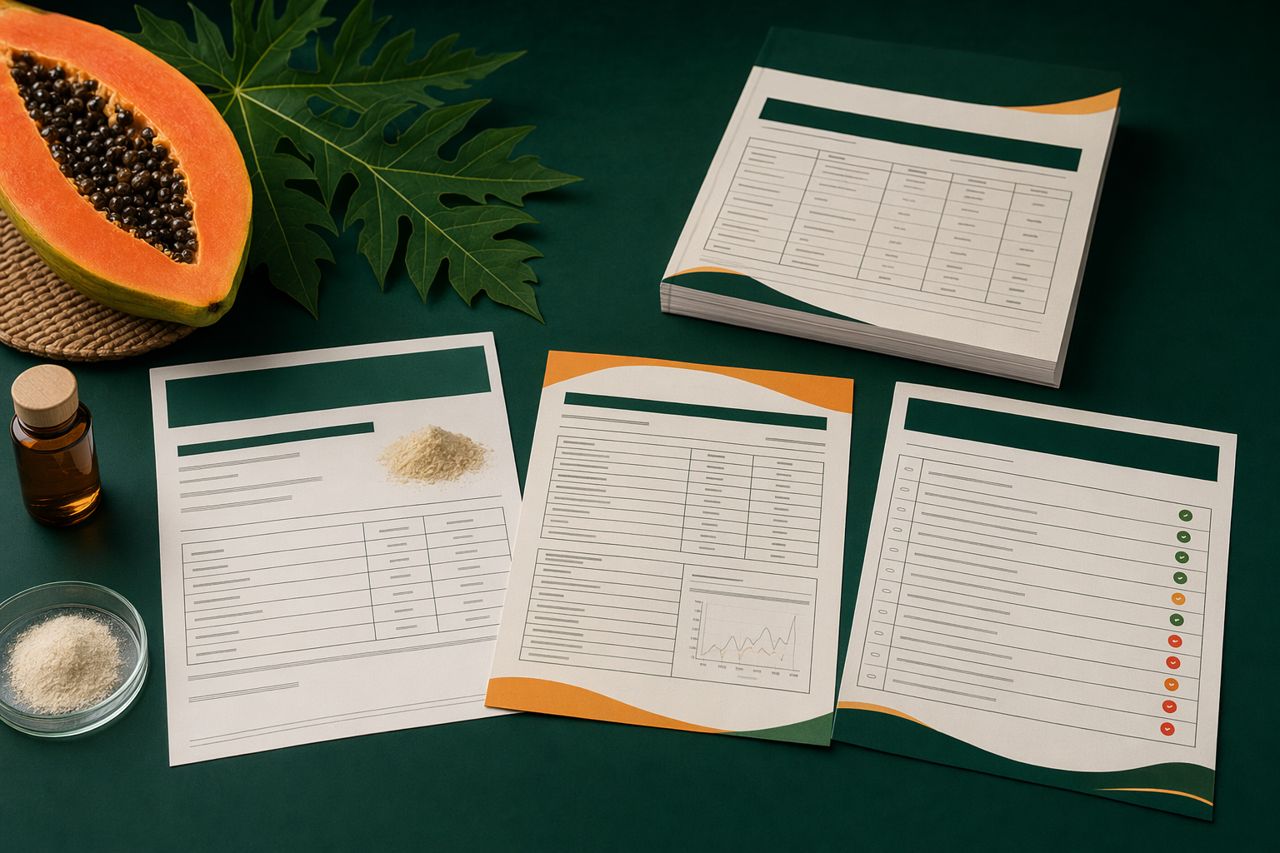
Recommended documents include:
- Current safety data sheet for the exact supplied format
- Product specification sheet with appearance, composition, and agreed quality limits
- Certificate of analysis for each lot
- Country of origin and botanical source statement
- Allergen and sensitivity declarations as applicable
- Food-grade, feed-grade, cosmetic, or technical-use suitability statement where relevant
- Non-GMO, vegetarian, vegan, halal, kosher, or other market declarations if required
- Heavy metals, microbiological, and contaminant statements appropriate to the application
- Residual solvent or carrier declarations when applicable
- Shelf-life, storage, and retest guidance
- Packaging description and palletization details
- Change-control and lot traceability expectations
Avoid qualifying Papain on generic documentation alone. The SDS and specification should match the physical form, carrier system, intended use, and supply route you are actually buying.
SDS and hazard labeling: what to verify
Hazard classification can vary by concentration, carrier, granulation, liquid stabilization system, and regional regulatory framework. A Papain powder, a diluted liquid, and a formulated blend may not carry the same safety label.

When reviewing an SDS, check:
- Product identity and whether it matches the purchase specification
- Relevant hazard classifications for respiratory, eye, skin, and ingestion exposure
- Recommended personal protective equipment
- First-aid language for dust inhalation, eye contact, and skin contact
- Spill-control and cleanup instructions
- Storage temperature, moisture protection, and incompatibility notes
- Transport classification, if any
- Disposal guidance for unused material and contaminated packaging
- Revision date and responsible supplier contact
For multinational operations, verify that the SDS format and language meet local workplace communication requirements.
Storage and handling conditions that protect safety and performance
Papain performance depends on maintaining the integrity of the enzyme through transport and storage. Safety and quality are connected: damaged packaging, uncontrolled humidity, or poor stock rotation can create both handling problems and inconsistent process outcomes.
Typical site controls include:
- Store sealed containers in a cool, dry, well-ventilated area
- Protect powders from moisture pickup and dust release
- Keep containers closed when not in use
- Segregate from incompatible chemicals and strong oxidizing conditions
- Use first-expiry, first-out inventory practice
- Label opened containers with date, handler, and internal batch reference
- Prevent cross-contact in shared blending or dispensing rooms
Confirm the supplier’s recommended storage range for the exact grade you intend to purchase.
Labeling considerations by end-use sector
Food and beverage processing
Papain may be used for tenderizing proteins, clarifying beverages, hydrolyzing proteins, or modifying texture. Labeling depends on whether the enzyme is considered a processing aid, ingredient, or functional component in the final market.
Dietary supplements and nutraceuticals
Supplement labels may require specific ingredient naming, source identification, warning language, or claim substantiation. Papain-containing products should be reviewed for enzyme activity in use, serving conditions, and consumer sensitivity language.
Cosmetics and personal care
Papain may appear in exfoliating, cleansing, or specialty treatment formulations. Cosmetic labeling and safety assessment should consider leave-on versus rinse-off exposure, concentration, sensitization review, and compatibility with the formulation matrix.
Animal nutrition and feed
Feed applications require review of local feed additive status, species suitability, carrier declaration, and any customer-specific documentation for integrated supply chains.
Technical and industrial use
For non-food processing, the central labeling issues often involve workplace hazard communication, customer SDS requirements, and whether the enzyme is present in downstream articles or effluents.
Supplier questions before you buy
Use these questions to reduce qualification delays:
- What physical formats are available: powder, granule, liquid, or custom blend?
- Which formats are best suited for low-dust charging or automated dosing?
- What carrier or stabilizer system is used, if any?
- What application sectors is this grade intended to support?
- What declarations are available for your target market?
- What is the minimum order quantity and standard packaging?
- What lot traceability and change-control process is in place?
- What lead time applies for routine and forecasted orders?
- Can documentation be aligned to customer audit requirements?
- Are alternative grades available if labeling, handling, or solubility requirements change?
Practical risk-reduction checklist
Before issuing a production purchase order, confirm the following:
- The Papain grade is appropriate for the end-use sector
- The SDS matches the supplied format and destination market
- The specification supports your receiving and release process
- EHS has reviewed dust, respiratory, skin, and eye exposure controls
- QA has reviewed allergen, source, and contaminant declarations
- Regulatory has reviewed finished product labeling obligations
- Operations has validated charging, blending, and cleanup procedures
- Packaging size fits the plant’s handling and inventory system
- Change notification expectations are documented
- The commercial quote reflects documentation, packaging, and supply requirements
Build Papain sourcing around safety, not just price
A lower unit price can become expensive if the grade creates dust exposure concerns, label uncertainty, documentation gaps, or batch inconsistency. The stronger procurement path is to qualify Papain by application fit, format, safety controls, regulatory support, and supply reliability.
Papain Enzyme Solutions helps industrial buyers define the grade, packaging, and documentation package that fit their process and market obligations.
Request a quote or get pricing
Tell us how Papain will be used, the destination market, required documentation, preferred format, and expected order volume. We will respond with a practical sourcing recommendation and pricing path.