Papain Storage, Handling, and Shelf-Life Basics
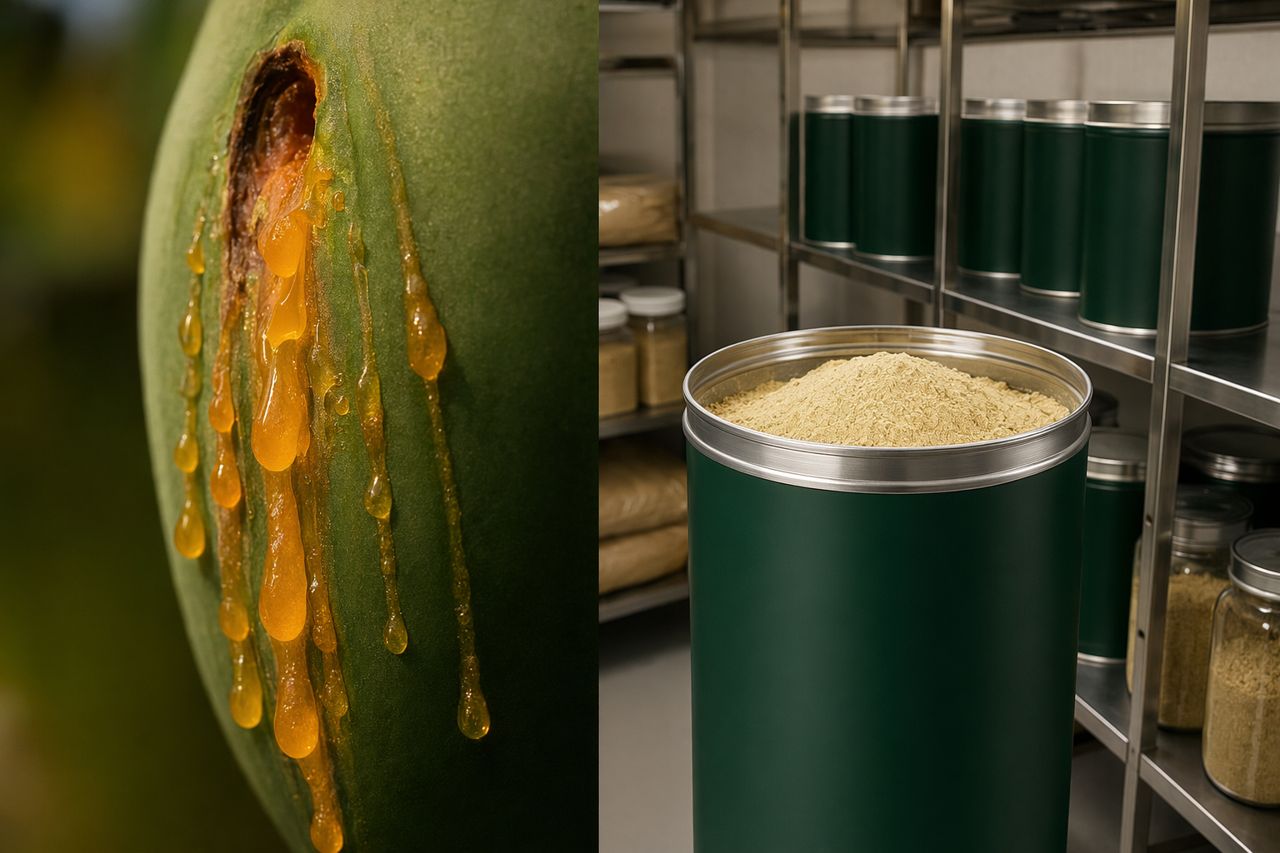
Papain is a botanical protease with industrial value across protein modification, tenderization, clarification, extraction, and specialty formulation work. Its performance depends not only on specification fit, but on what happens after the lot arrives: warehouse temperature, humidity exposure, container discipline, sanitation, staging time, and how opened material is returned to storage.
This guide is written for procurement teams, QA, warehouse supervisors, formulation scientists, and process engineers who need practical controls for receiving, storing, opening, and using Papain in production.
Why storage discipline matters
Papain is a functional protein. Like other enzyme materials, it can lose useful performance when exposed to moisture, excessive heat, incompatible chemicals, contamination, or repeated handling errors. The goal is not complicated: keep the lot dry, sealed, traceable, clean, and used within its documented shelf-life or retest window.
Good storage practice helps protect:
- Batch-to-batch consistency in hydrolysis, tenderization, clarification, or extraction steps.
- Yield and sensory quality where Papain affects texture, soluble protein release, haze reduction, or downstream recovery.
- Procurement value by reducing avoidable write-offs, clumping, rejected lots, and emergency reorder pressure.
- Audit readiness through clear lot traceability, opened-date labeling, and excursion records.
Recommended storage conditions
Always follow the lot-specific Certificate of Analysis, product label, and Safety Data Sheet supplied with the shipment. In general, Papain should be stored under controlled conditions that limit heat, moisture, and cross-contamination.
For unopened material
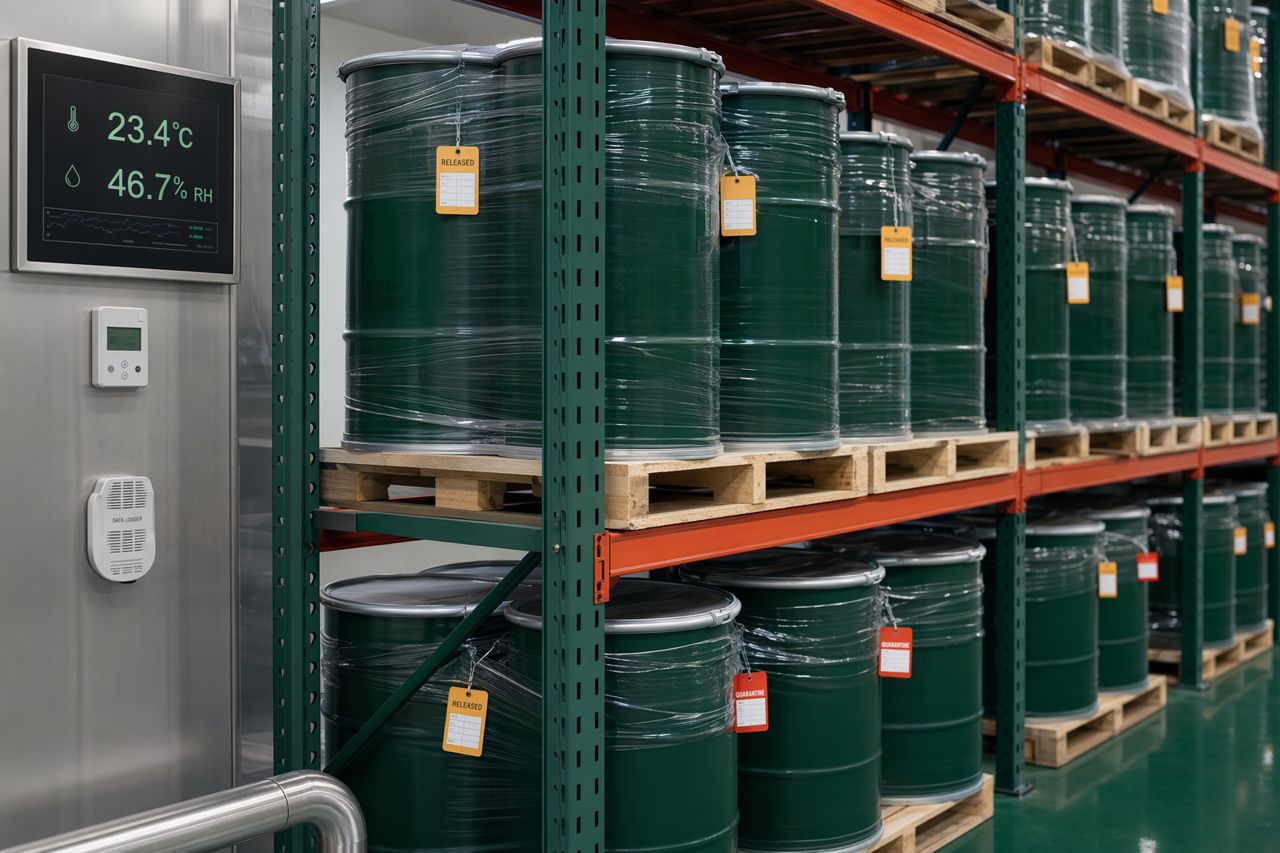
- Keep containers sealed in original packaging until production or QC release requires access.
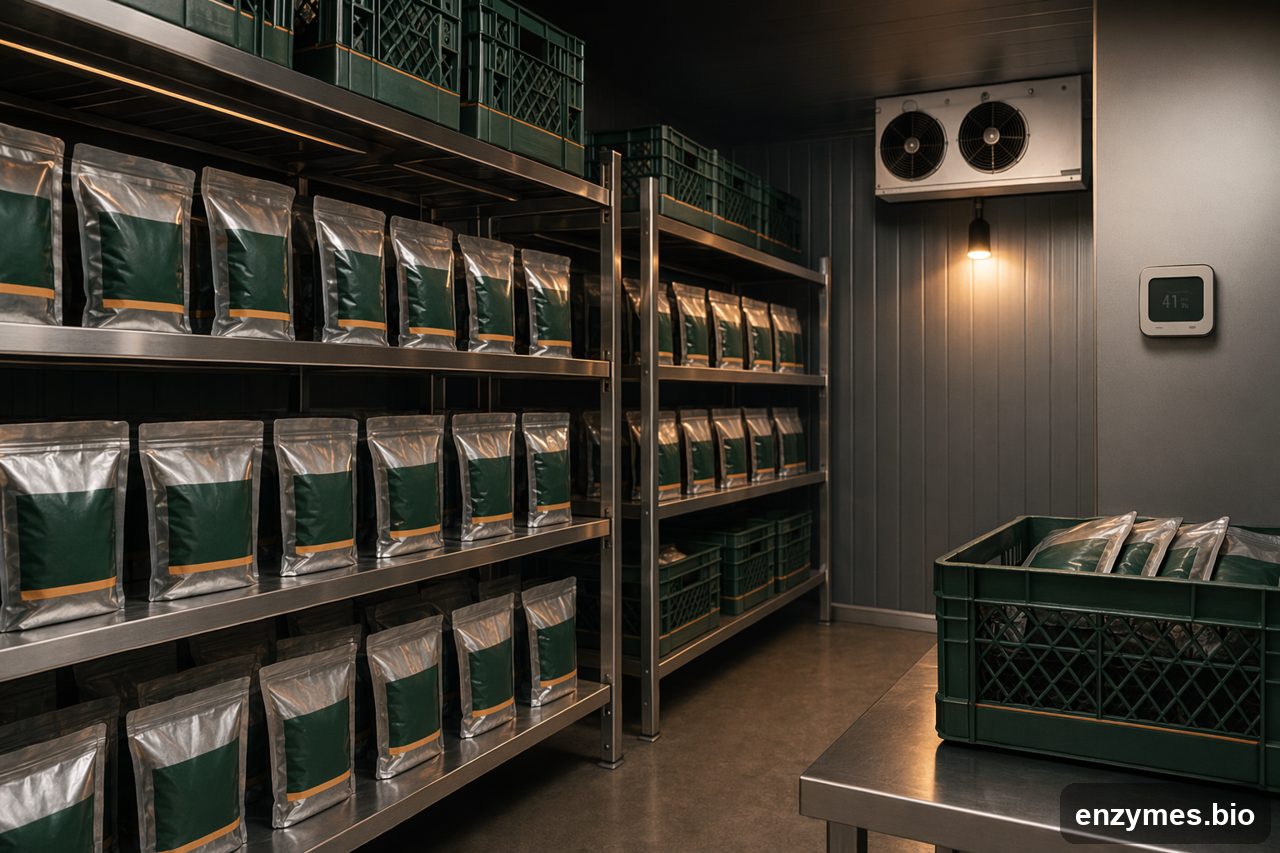
- Store in a cool, dry, controlled area away from steam lines, washdown zones, exterior doors, and direct sun.
- Use refrigerated storage when long holding periods are expected and when supported by the lot documentation.
- Avoid rapid temperature swings that can create condensation on or inside packaging.
- Segregate from strong oxidizing materials and other incompatible substances identified by your internal safety review.
For opened material
Once a container is opened, the main risk usually shifts from warehouse temperature to moisture uptake and handling contamination.
- Open only in a clean, dry, controlled area.
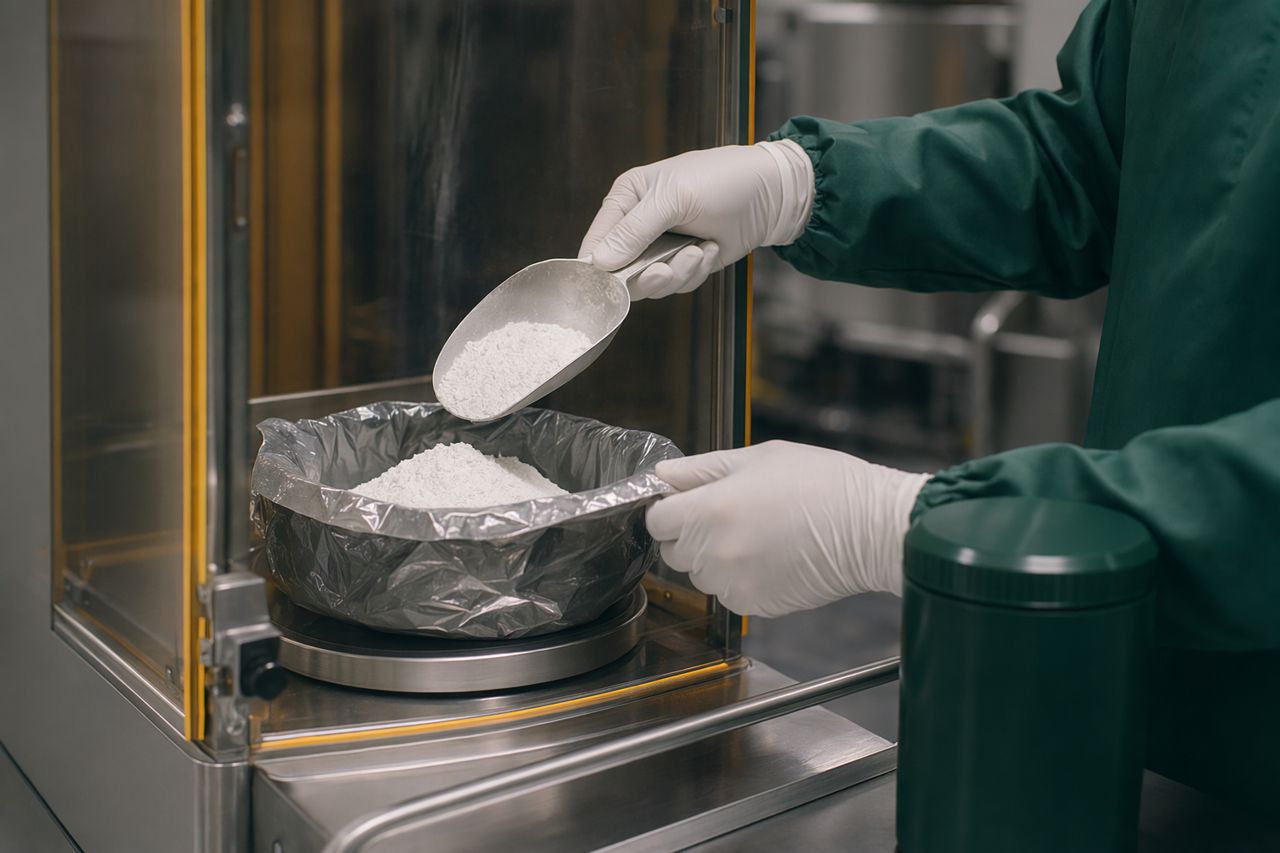
- Use dry, dedicated scoops or transfer tools.
- Do not return unused material that has contacted process equipment, open benches, or non-dedicated vessels.
- Reseal immediately after dispensing.
- Record the opening date, operator, remaining quantity, and internal retest or use-by date.
- Where appropriate, transfer smaller working quantities into qualified secondary containers to reduce repeated opening of the master pack.
Temperature: controlled, documented, and consistent
Papain should not be staged casually near heat sources or process lines. Elevated temperature exposure can reduce useful proteolytic performance over time, especially when paired with humidity.
A practical temperature program should define:
| Situation | Operational risk | Recommended control |
|---|---|---|
| Receiving dock delays | Warm exposure before QA release | Move promptly to designated storage and document any delay |
| Cold storage to production room | Condensation on powder or inner liner | Let sealed containers equilibrate before opening |
| Open weighing area near wet processing | Moisture uptake and clumping | Dispense in a dry area with controlled workflow |
| Shift staging | Unnecessary warm hold time | Stage only what production will use within the planned run |
| Excursion event | Unknown impact on consistency | Quarantine, review documentation, and retest or reject by QA decision |
For liquid Papain preparations, do not freeze or heat unless your formulation and validation data support it. Liquid formats can be more sensitive to microbial control, pH drift, and prolonged warm holding than dry formats.
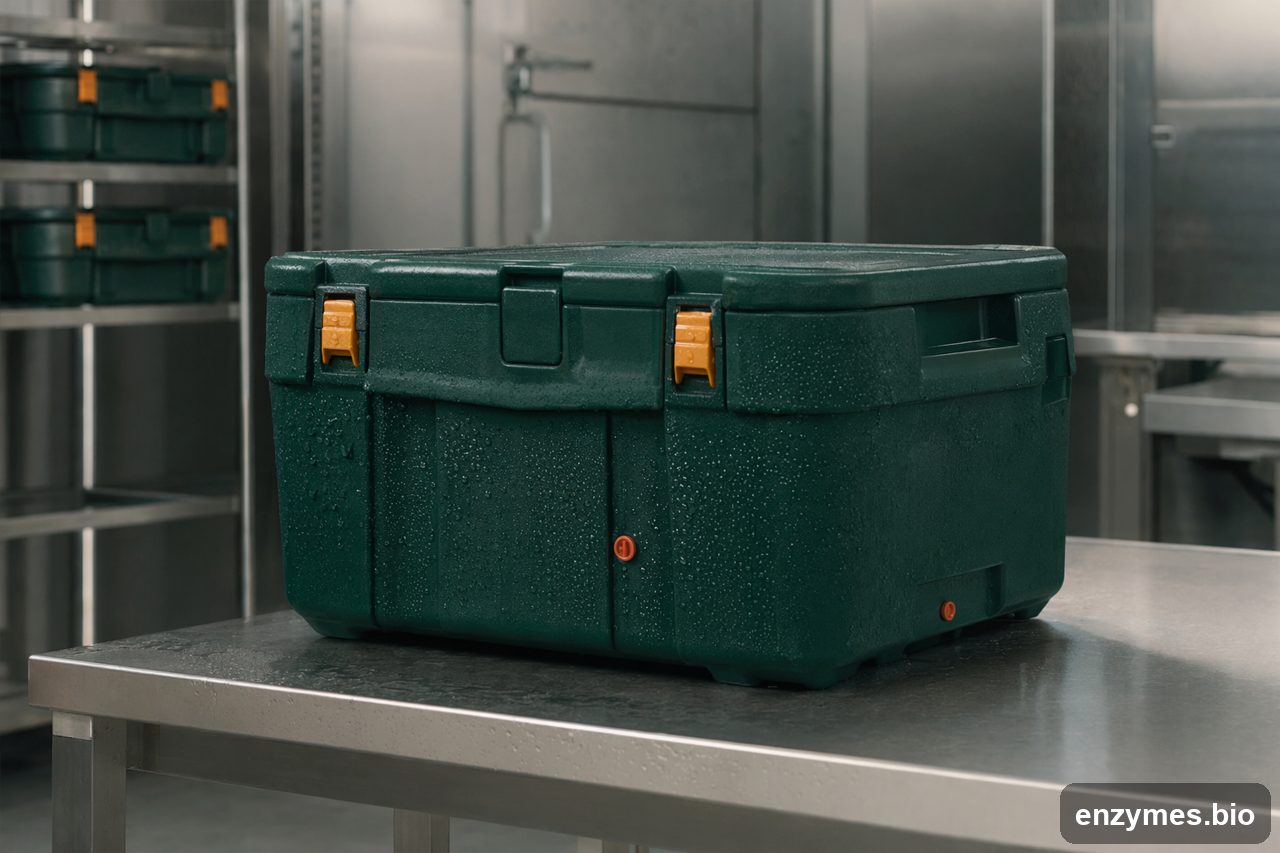
Humidity control is often the decisive factor
Moisture is one of the most common causes of avoidable Papain handling problems. Even when a lot remains chemically usable, humidity exposure can create clumping, uneven dispersion, weighing variability, and poor flow during transfer.
Use these controls as standard practice:
- Keep the original liner and closure intact until use.
- Open containers away from washdown, steam, kettle charging, and high-humidity zones.
- Bring chilled containers to room conditions while still sealed before opening.
- Reseal between partial dispenses, even during the same shift.
- Do not use wet scoops, wet gloves, or recently cleaned utensils unless fully dry.
- Investigate any sudden caking, visible moisture, color shift, or unusual odor before release to production.
Receiving checklist for procurement and QA
A strong shelf-life program starts at receiving. Do not wait until production discovers a problem.
At intake, verify:
- Correct material name: Papain.
- Supplier lot number and internal item code.
- Packaging integrity, seals, liners, and tamper evidence.
- Certificate of Analysis and Safety Data Sheet availability.
- Shelf-life, retest date, or recommended storage condition shown on lot documents.
- Quantity, pack size, and labeling alignment with the purchase order.
- Transit condition if controlled shipping was specified.
If packaging is damaged, wet, unsealed, mislabeled, or inconsistent with purchasing documents, quarantine the lot before use.
Handling during weighing and production staging
Papain should be handled as an enzyme material, not as an ordinary dry ingredient. Enzyme dust can be irritating or sensitizing; follow your facility’s industrial hygiene program and the Safety Data Sheet.
Recommended production controls include:
- Local exhaust or appropriate containment during weighing and transfer.
- Gloves, eye protection, and respiratory protection as required by risk assessment.
- Low-dust transfer practices.
- Clean, dry, dedicated tools.
- Closed containers during line waits.
- Clear separation from allergen, flavor, color, or microbial-sensitive materials when relevant.
- Written batch records showing lot number, mass issued, operator, and time of addition.
For powders, avoid aggressive dumping that creates airborne dust. For liquid formats, avoid splashing and keep caps, pumps, and fittings clean between uses.
Preparing Papain solutions or slurries
Many facilities prefer to pre-disperse Papain before dosing. That can improve distribution, but it also introduces new variables: water quality, pH, temperature, hold time, sanitation, and mixing energy.
For solution or slurry preparation:
- Prepare close to the time of use.
- Use validated water quality or buffer systems.
- Confirm pH and process temperature are compatible with the intended application.
- Avoid prolonged warm holds.
- Keep tanks or vessels covered.
- Do not mix with oxidizing sanitizers, incompatible preservatives, or reactive ingredients unless validated.
- Define maximum hold time in the batch record.
If a solution becomes hazy, discolored, odorous, or unexpectedly viscous, place it on hold and investigate before charging the process.
Shelf-life, retest, and opened-container policy
Papain shelf-life is lot-specific and depends on format, packaging, storage condition, and handling history. Treat the stated shelf-life as valid only when the material has been stored as specified and the container remains suitable for use.
A practical program should include:
- First-expire-first-out inventory rotation.
- Internal retest rules for opened containers.
- Quarantine procedures for temperature or humidity excursions.
- Visual inspection before each use.
- Clear reject criteria for damaged packaging, moisture exposure, foreign material, or unresolved documentation gaps.
Opened containers generally deserve more conservative handling than unopened containers. If production uses Papain infrequently, consider smaller pack sizes to reduce repeated opening and long partial-container storage.
Packaging decisions that reduce operational risk
Procurement can reduce waste by matching pack size and packaging format to actual production rhythm.
Consider:
- Smaller packs for pilot plants, seasonal production, or low-frequency formulations.
- Larger sealed drums only where usage rate supports rapid turnover after opening.
- Moisture-barrier liners for powder formats.
- Tamper-evident closures for regulated or audit-sensitive environments.
- Clear external labels for lot, storage condition, and retest date.
- Secondary containment where spill control or segregation is required.
The lowest unit cost is not always the lowest process cost. A pack that stays sealed until use can protect more value than a bulk size that remains open for months.
When to contact Papain Enzyme Solutions before ordering
Contact our team if you are deciding between powder and liquid Papain, setting a new storage SOP, qualifying a second source, planning a toll manufacturing run, or trying to align pack size with production cadence.
We can help clarify practical commercial details such as:
- Available grades and formats.
- Typical packaging options.
- Lead-time planning.
- Documentation requirements.
- Storage expectations for your receiving and production environment.
- Lot reservation or repeat-order planning.
Request pricing or storage guidance
Use the form below to request a quote, confirm pack-size options, or discuss Papain storage requirements for your process.