Papain vs Bromelain: Choosing a Plant Protease
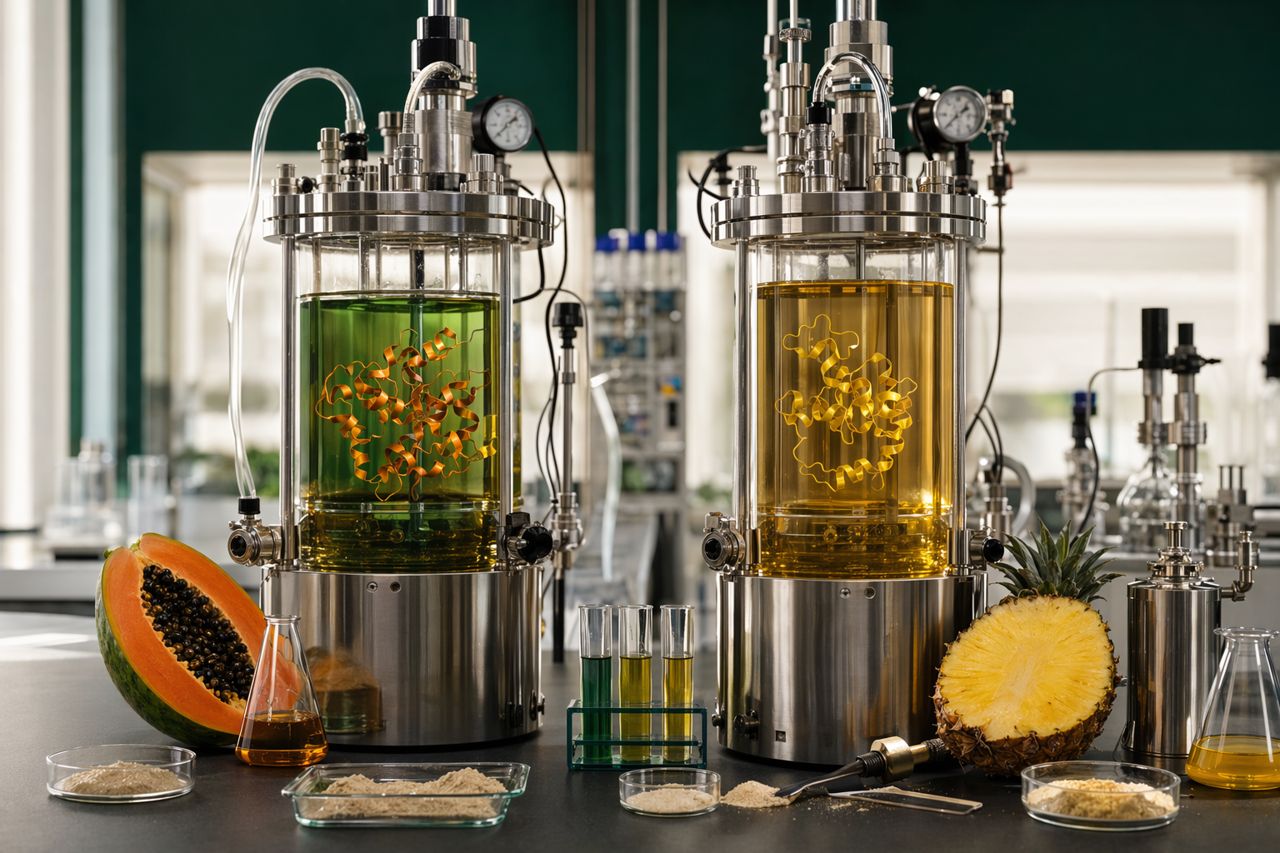
Plant proteases are often grouped together in early formulation discussions, but Papain and bromelain do not behave identically in production. Both are cysteine proteases. Both are plant-derived. Both can break down protein networks in food, beverage, nutraceutical, cosmetic, and technical applications.
The choice becomes clearer when the question shifts from origin to outcome: What substrate are you modifying, what sensory profile can you tolerate, and how much process variation can your line absorb?
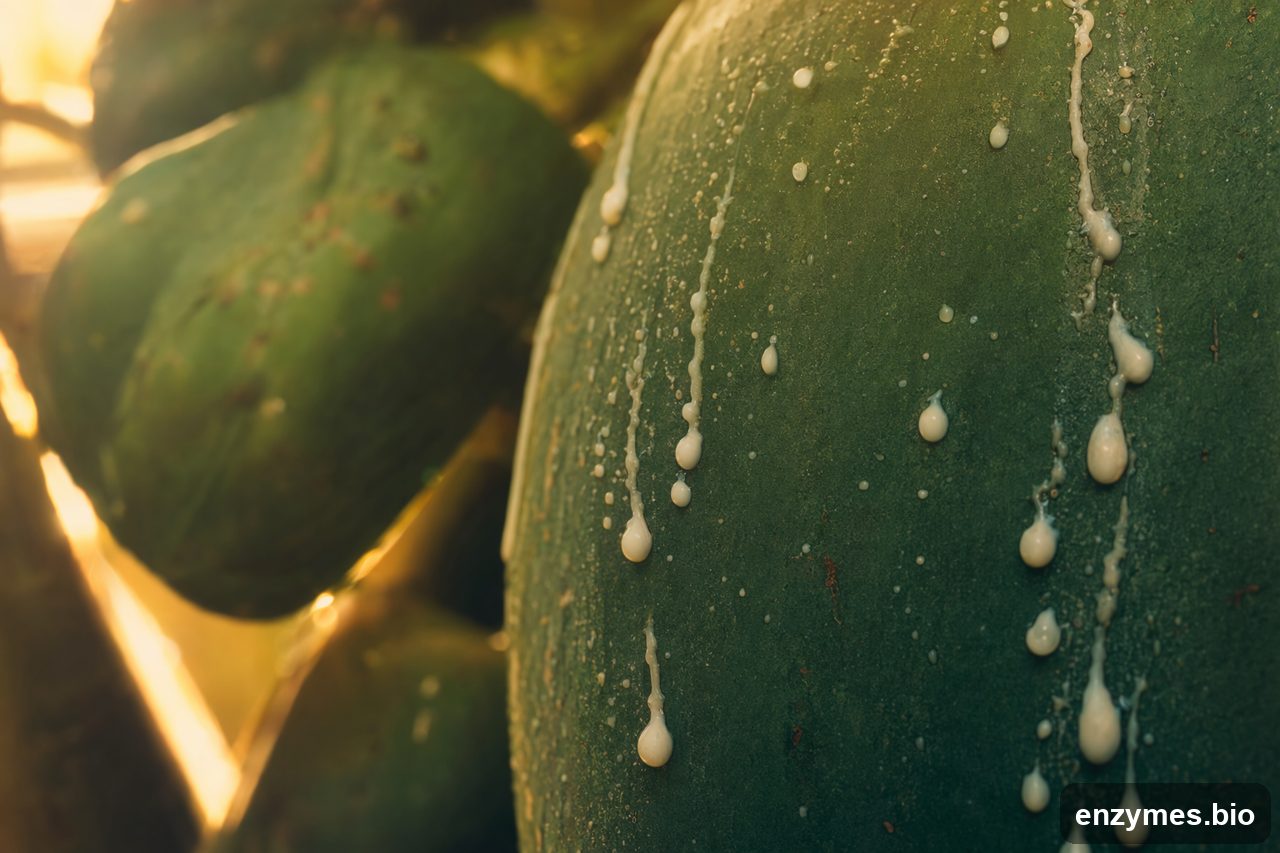
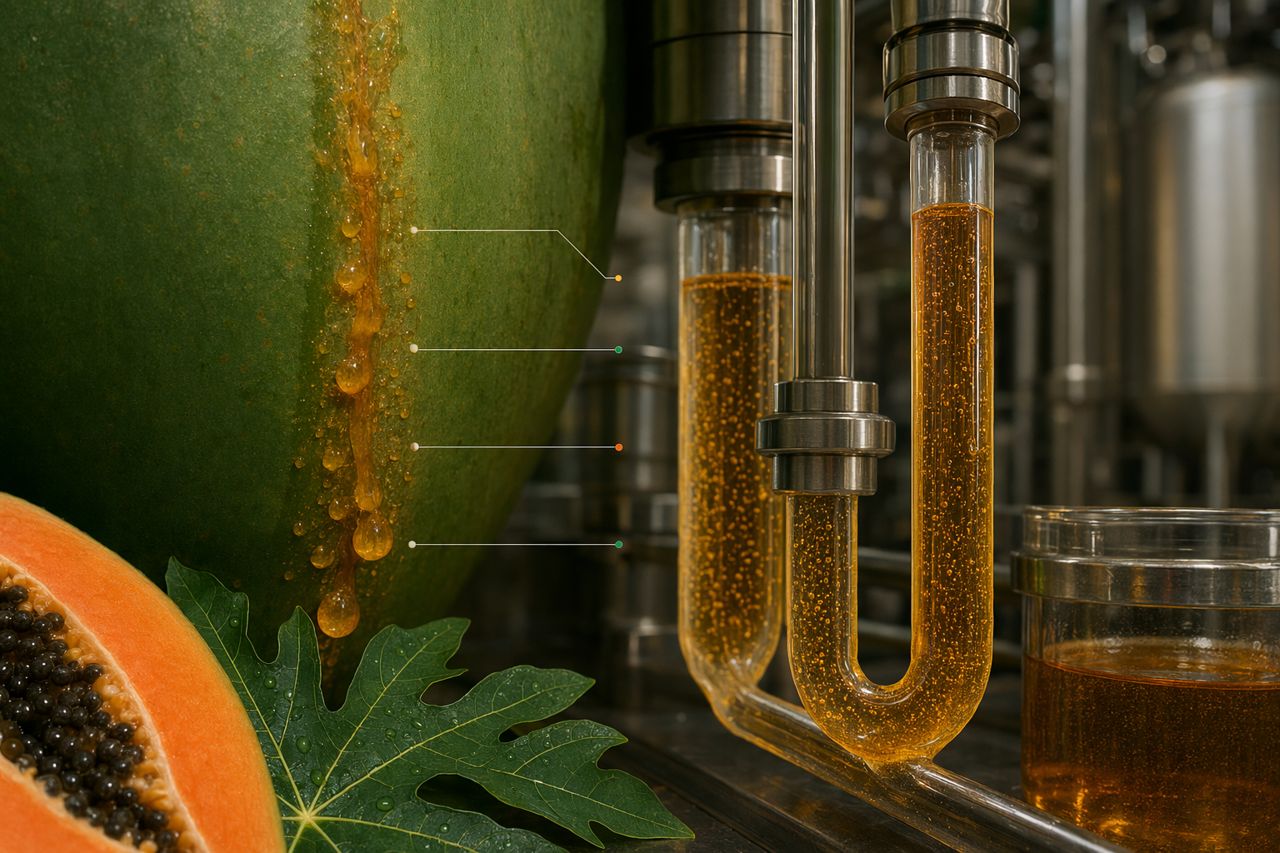
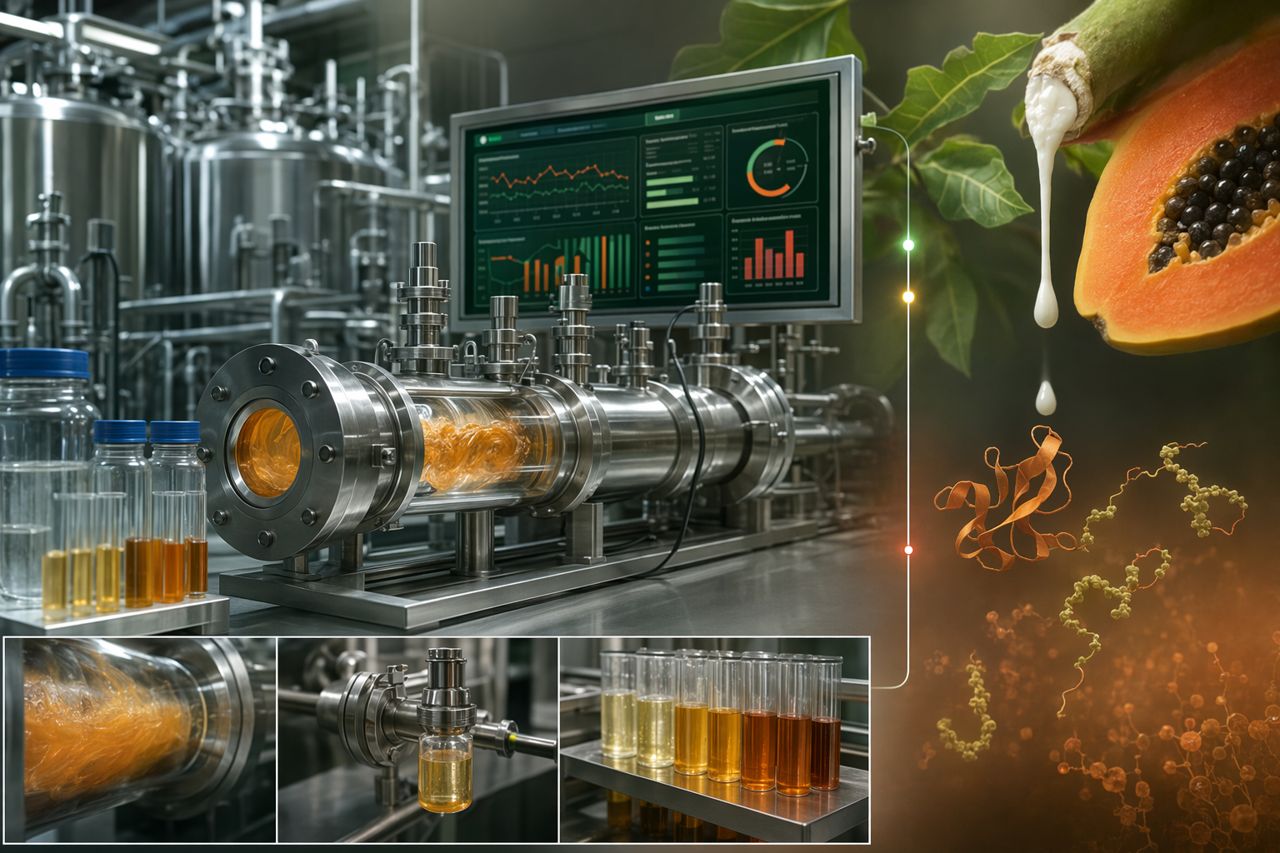
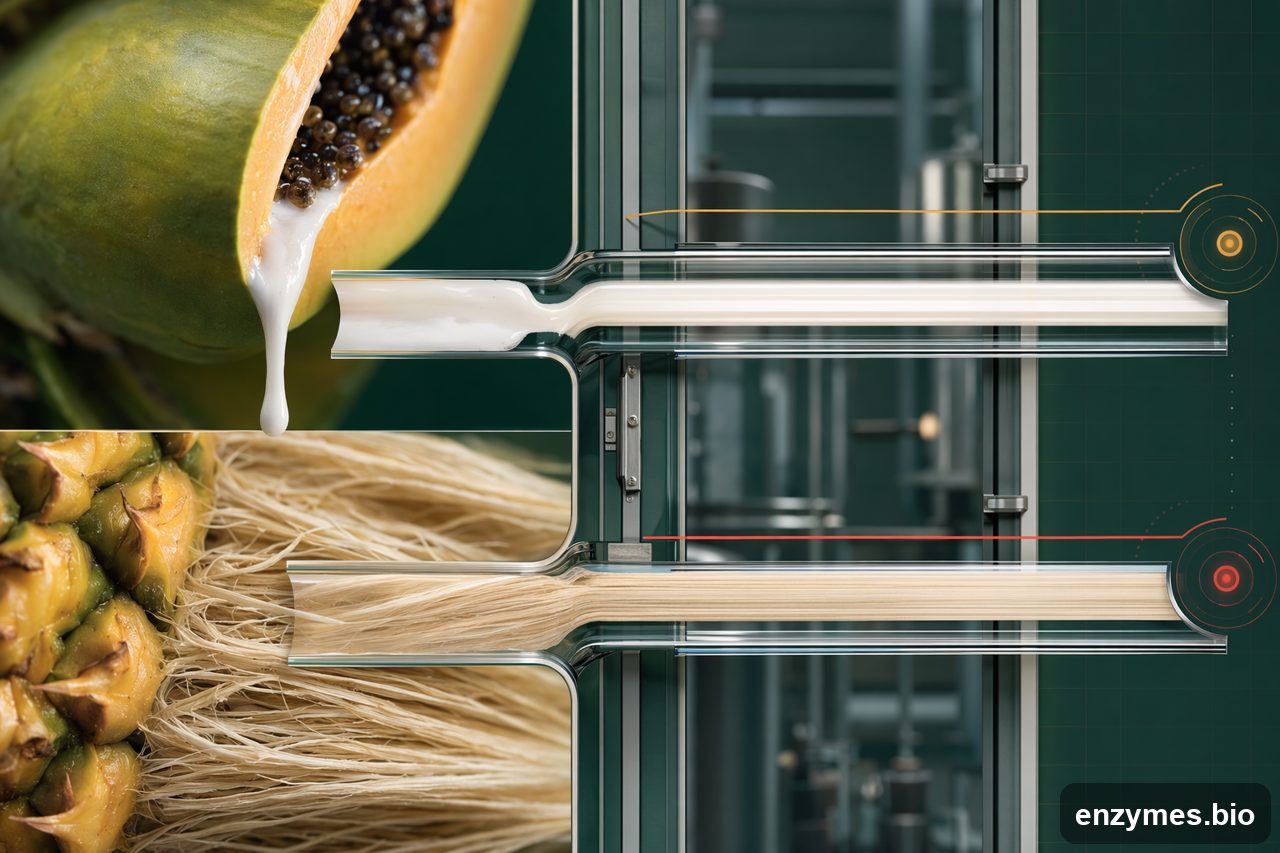
Papain, derived from papaya latex, is valued for broad proteolytic behavior, dependable process utility, and strong performance in applications where controlled softening, clarification, protein modification, or digestibility improvement is required. Bromelain, obtained from pineapple stem or fruit material, can be highly effective as well, but its blended enzyme profile and sourcing variables may require tighter qualification for certain formulations.
Executive comparison
| Decision factor | Papain | Bromelain |
|---|---|---|
| Botanical source | Papaya latex | Pineapple stem or fruit material |
| Protease type | Plant cysteine protease | Plant cysteine protease mixture |
| Process character | Broad, practical, formulation-friendly | Effective, but often more source-dependent |
| Common industrial uses | Meat tenderizing, protein hydrolysis, brewing and beverage clarification, digestive formulations, cosmetic exfoliation, technical protein modification | Meat tenderizing, protein hydrolysis, nutraceutical blends, topical and cosmetic concepts |
| Sensory management | Often selected where predictable softening and hydrolysis control matter | Can perform strongly, but bitterness and texture drift must be monitored in some matrices |
| Procurement focus | Latex origin, grade, microbiology, heavy metals, carrier system, documentation | Stem/fruit origin, fraction profile, documentation, seasonal and regional consistency |
| Best-fit decision | Choose when you need a broadly useful protease with reliable process integration | Choose when pineapple-derived positioning or a specific bromelain performance profile is required |
Where Papain tends to fit best
Papain is frequently chosen when teams need a plant-derived protease that can be integrated into established production without making the formulation feel experimental. It is especially useful where the target is controlled protein breakdown rather than aggressive destruction of structure.
Typical B2B use cases include:
- Meat and seafood processing: tenderization, bite improvement, yield support, and texture standardization across variable raw materials.
- Protein hydrolysates: modification of animal, plant, dairy, or marine proteins for solubility, viscosity control, and digestibility positioning.
- Brewing and beverage: haze reduction and improved clarity where protein instability is a known issue.
- Digestive and nutrition products: plant-derived protease positioning in capsules, tablets, powders, and functional blends.
- Cosmetic and personal care: enzymatic exfoliation and protein film modification in rinse-off or controlled-contact formats.
- Technical processing: protein removal, softening, and controlled degradation in industrial formulations.
The commercial advantage is not simply that Papain cuts proteins. It is that it can be specified, trialed, and scaled with a relatively clear process conversation: substrate, contact time, pH window, temperature exposure, moisture, salt, inhibitors, and the desired endpoint.
Where bromelain can be the better choice
Bromelain may be preferred when pineapple origin supports the product story or when internal trials show a desirable functional profile in the target substrate. It is commonly considered for tenderizing, supplement blends, topical concepts, and hydrolysis work.
However, bromelain is not a single uniform molecule in the way many buyers imagine it. Commercial bromelain preparations can vary by source material, processing route, and composition. That does not make bromelain inferior. It means procurement and technical teams should qualify it carefully against the actual production objective.
Use bromelain when:
- Pineapple-derived positioning matters to marketing or product architecture.
- Your matrix responds better to the bromelain profile in pilot trials.
- Your supplier can provide consistent grade documentation across lots.
- Sensory and texture endpoints remain stable after scale-up.
Key technical differences formulation teams should evaluate
1. Substrate response
Papain and bromelain both act on peptide bonds, but they can produce different hydrolysis patterns in real matrices. That difference matters when the finished product depends on bite, mouthfeel, viscosity, clarity, or flavor release.
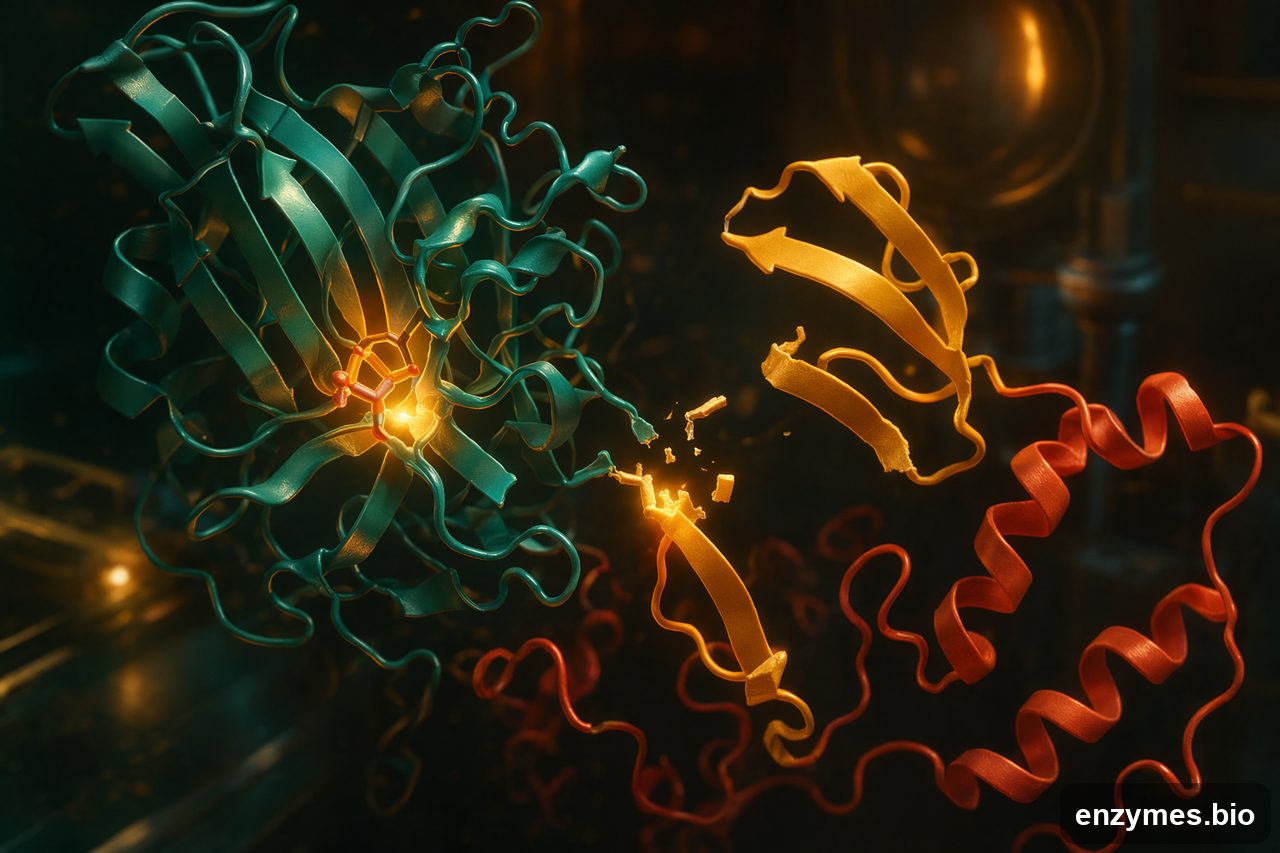
For example, a meat system may require softening without mushiness. A protein beverage may require solubility improvement without excessive bitterness. A cosmetic exfoliant may require surface activity without irritation risk. In each case, the correct protease is the one that delivers the endpoint cleanly under your process conditions.
2. Sensory impact
Proteolysis can improve texture and digestibility, but over-processing can create bitterness, thinning, or loss of structure. Papain is often selected where teams want a familiar, controllable route to protein modification. Bromelain can also perform well, but sensory drift should be checked closely, especially in protein-rich systems where peptide profile affects flavor.
Recommended evaluation points:
- Texture before and after processing
- Bitter notes after holding or storage
- Viscosity change during production
- Clarity or sedimentation behavior
- Compatibility with salt, sugar, acid, preservatives, and thermal steps
3. Process window
Neither enzyme should be chosen from a catalog line alone. The operating environment determines practical performance. Temperature, pH, water activity, contact time, and inactivation strategy can shift results significantly.
Papain is often valued because it tolerates a useful range of industrial conditions, particularly in food and protein modification work. Bromelain may require a more specific qualification program depending on the grade and supplier.
For both enzymes, the process engineer should define:
- Where the enzyme is added
- How it disperses
- How long it remains active
- What stops or slows the reaction
- Whether the downstream process changes the endpoint
4. Supply and documentation
For B2B buyers, consistency is a commercial issue as much as a technical one. A protease that performs well in a bench trial but shifts lot to lot can disrupt quality targets, customer complaints, and production planning.
Papain procurement should focus on:
- Papaya latex origin and processing controls
- Food, cosmetic, or technical grade suitability
- Carrier and dilution system, if supplied as a formulated grade
- Microbiological profile
- Heavy metals and contaminant controls
- Allergen, GMO, vegan, kosher, halal, and regulatory documentation as applicable
- Lot traceability and change-control communication
Bromelain procurement should focus on the same documentation, with added attention to pineapple source material, fraction consistency, and seasonal supply variation.
Practical selection guide
Choose Papain when you need:
- A broad plant protease for multiple product platforms
- Controlled tenderization or protein softening
- Reliable integration into food or beverage processes
- Protein hydrolysis with manageable sensory development
- A practical enzyme for scale-up, not only bench performance
- A supplier discussion centered on process fit, documentation, and repeatability
Choose bromelain when you need:
- Pineapple-derived ingredient positioning
- A bromelain-specific performance profile confirmed in trials
- A supplement or topical concept where bromelain has category familiarity
- A formulation where pilot data shows better performance than Papain
Application-by-application view
Meat tenderizing
Papain is one of the best-known options for controlled meat tenderization. It can help reduce toughness caused by variable raw material and can support more consistent bite across batches. The main formulation risk is over-tenderization, so addition rate, distribution, contact time, and thermal history must be controlled.
Bromelain can also tenderize effectively. In some systems it may act more aggressively or differently depending on grade, so validation should include finished texture after cooking, holding, freezing, and reheating if those steps apply.
Protein hydrolysates
Papain is useful in protein hydrolysate development because it can help adjust solubility, viscosity, and digestibility characteristics. It is often evaluated for animal proteins, plant proteins, dairy-adjacent systems, collagen-rich substrates, and marine proteins.
Bromelain may be suitable where its hydrolysis profile produces the preferred sensory or functional result. For either enzyme, bitterness control and endpoint definition are essential.
Beverage clarification
Papain can be used where protein haze contributes to instability. The goal is not maximum protein destruction; it is enough modification to improve clarity and shelf appearance while preserving the intended sensory profile.
Bromelain is less commonly the default choice for this use case, but it may be evaluated in specific beverage systems where the process and labeling strategy support it.
Digestive and nutrition formulations
Both enzymes are used in digestive-positioned products. Papain offers papaya-derived recognition and broad protease utility. Bromelain offers pineapple-derived recognition and a familiar supplement category presence.
For finished dosage forms, the key questions are compatibility with excipients, moisture control, storage stability, labeling requirements, and documentation.
Cosmetics and personal care
Papain is used in enzymatic exfoliation concepts and protein film modification. It requires careful formulation discipline because enzyme activity at the skin surface must be controlled by product format, contact time, pH, and rinse behavior.
Bromelain may be used similarly, particularly where pineapple-origin storytelling is desired. As with Papain, safety, irritation potential, and stability must be validated in the final product.
How to run a fair Papain vs bromelain trial
A useful comparison should be designed around the finished product, not a generic enzyme ranking.
- Define the endpoint. Texture, clarity, viscosity, solubility, peptide profile, yield, or sensory target.
- Use the actual substrate. Supplier samples tested in model systems can mislead if the real matrix is more complex.
- Match process conditions. Evaluate realistic addition points, temperatures, pH, mixing, and hold times.
- Build an inactivation or control step. Proteases that remain active too long can keep changing the product.
- Measure the finished article. Include storage, heat exposure, freeze-thaw, or consumer preparation if relevant.
- Check documentation early. Do not select a technically strong enzyme that cannot meet your regulatory or customer file requirements.
The bottom line
Papain and bromelain are both capable plant proteases, but they are not interchangeable commodities. Papain is often the stronger starting point when a team needs broad functionality, controlled protein modification, and efficient scale-up. Bromelain deserves consideration when pineapple origin or a validated bromelain-specific performance profile matters.
The right decision is made in the matrix, under your process conditions, with commercial documentation reviewed before scale-up.
Request pricing or a technical fit review
If you are comparing Papain against bromelain for a live formulation, share the target application, substrate, process conditions, grade requirements, and annual volume estimate. Papain Enzyme Solutions can help align Papain grade selection with the performance, documentation, and supply profile your program needs.