Papain vs General Protease Enzymes
Protease is a broad enzyme category. Papain is a specific, named protease with a recognizable botanical origin, a defined technical identity, and a long record of use in protein modification.
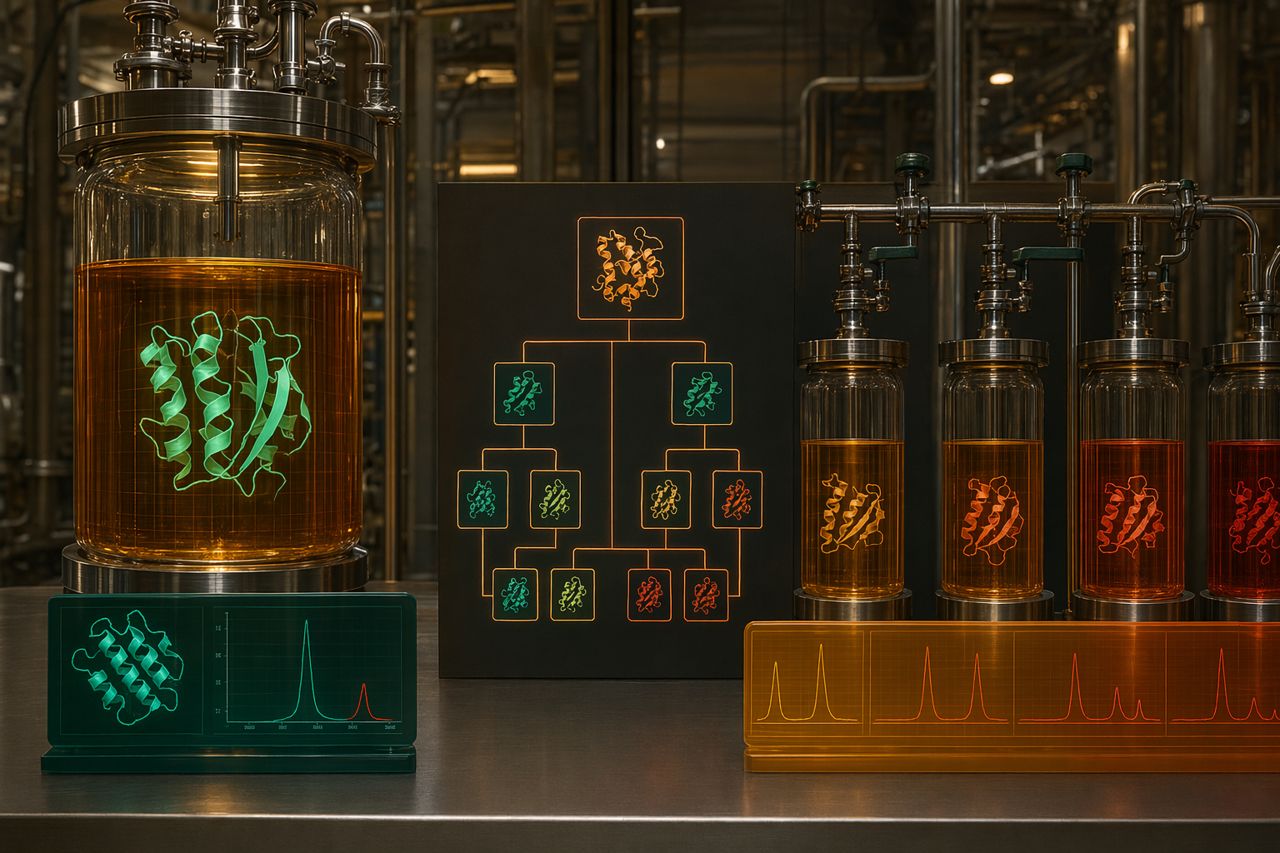
For industrial buyers, the distinction matters. A quote for “protease” may describe many possible enzyme systems: plant, fungal, bacterial, neutral, alkaline, acid-stable, endo-acting, exo-acting, blended, immobilized, liquid, powdered, or carrier-supported. Papain is not simply a synonym for protease. It is one protease option with its own processing behavior, formulation advantages, and sourcing expectations.

Papain Enzyme Solutions frames the question this way: do you need a broad protease category, or do you need the specific performance profile of Papain?
The short answer
Papain is a protease. Not every protease is Papain.
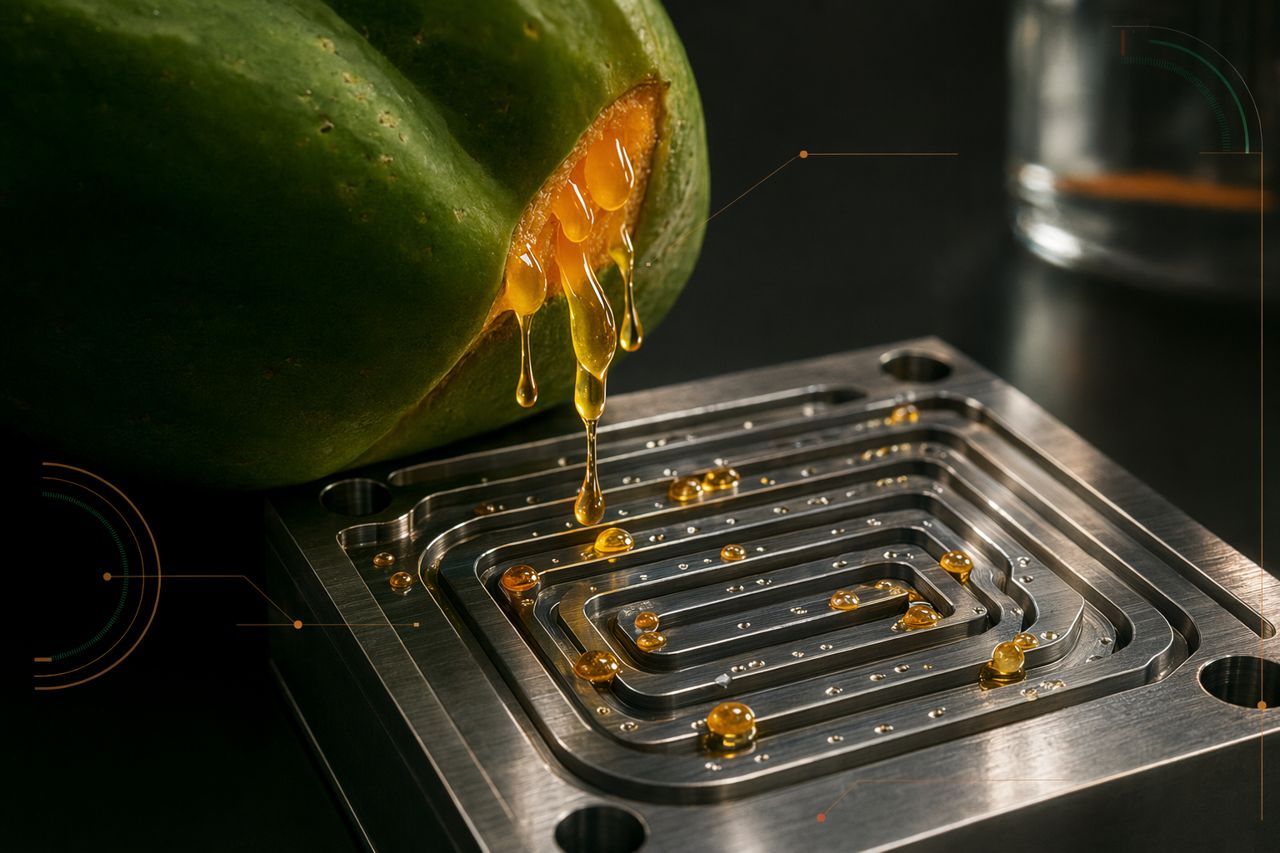
Papain is a plant-derived cysteine protease traditionally obtained from papaya latex. It cleaves peptide bonds in proteins and is used where controlled protein breakdown can improve texture, clarity, solubility, digestibility, viscosity, filtration behavior, or downstream yield.
A “general protease” specification, by contrast, may refer to a wide range of enzymes with different sources, substrate preferences, stability profiles, side activities, and formulation systems. That flexibility can be useful, but it also requires tighter qualification.
Why the distinction matters in B2B sourcing
When a buyer asks for protease, suppliers may respond with materially different products. Two offers can look similar on paper while behaving differently in production.
The key variables are not only price and label name. They include:
- Enzyme identity: Papain, bromelain, fungal protease, bacterial protease, neutral protease, alkaline protease, or a blend.
- Substrate fit: Whether the enzyme works best on meat proteins, dairy proteins, plant proteins, collagen-rich material, gelatin systems, yeast-derived proteins, or mixed substrates.
- Process window: The temperature, pH, salt, sugar, fat, alcohol, and solids conditions under which the enzyme remains useful.
- Format: Powder, granule, liquid, carrier-supported, low-dust, or process-specific preparation.
- Documentation: Food, cosmetic, nutraceutical, feed, technical, or other compliance documentation depending on end use and market.
- Sensory impact: Whether the enzyme supports the desired texture and flavor outcome without excessive bitterness, over-softening, or loss of structure.
- Batch consistency: Whether the preparation gives repeatable results across production lots and raw material variability.
Papain gives formulation and procurement teams a more precise starting point than an undefined protease request.
Papain at a glance
Papain is valued because it combines botanical origin with broad protein-cleaving functionality. In practical terms, it can be used to soften, hydrolyze, clarify, modify, or process protein-containing materials under moderate industrial conditions.
Common industrial interest areas include:
- Meat and seafood texture modification
- Protein hydrolysates and peptide generation
- Brewing and beverage clarification support
- Plant protein processing
- Collagen, gelatin, and connective tissue modification
- Nutraceutical and digestive support formulations
- Cosmetic exfoliation and skin-feel systems
- Selected technical processing applications where protein removal or modification is required
Papain is not automatically the best enzyme for every protease job. It is best considered when its source, process behavior, and substrate performance align with the target outcome.

General protease: useful category, broad variability
General protease preparations are often selected when the buyer wants a functional protein-modifying enzyme but has not yet fixed the enzyme identity. This can be appropriate in early screening, cost-down projects, or applications where several protease families may perform adequately.
However, the word “protease” does not define enough by itself. A bacterial alkaline protease used in detergent or technical cleaning is not equivalent to a plant protease selected for food texture. A fungal protease developed for acid conditions may not behave like Papain in a meat, beverage, or peptide application. A blended protease system may deliver high conversion but introduce unexpected sensory or process effects.
For this reason, an industrial protease inquiry should always move from category language to specification language.
Papain vs general protease: practical comparison
| Buying question | Papain | General protease |
|---|---|---|
| What is it? | A specific plant-derived cysteine protease | A broad category covering many enzyme types |
| Source clarity | Botanical origin from papaya latex | Depends on the enzyme: plant, fungal, bacterial, animal-derived, or blended |
| Procurement precision | Higher, because the enzyme identity is named | Lower until the exact protease type is defined |
| Application fit | Strong candidate for controlled protein modification, tenderizing, clarification, hydrolysis, and cosmetic exfoliation systems | Can be tailored widely, but requires screening and supplier disclosure |
| Sensory risk | Manageable when dose, contact time, and inactivation are controlled | Highly variable depending on enzyme family and side activities |
| Process qualification | Built around Papain’s known performance profile | Must begin by identifying the protease class and preparation design |
| Best use case | When a defined Papain profile matches the product and processing goal | When multiple protease options are still being compared |
When Papain is the better conversation
Papain should be on the shortlist when your team needs a named, botanically derived protease with a practical record in protein modification.
Consider Papain when the project goal includes:
- Improving tenderness without fully breaking down structure
- Creating controlled hydrolysis of animal or plant proteins
- Supporting clarification or haze reduction in protein-sensitive systems
- Modifying viscosity in protein-containing slurries or extracts
- Developing peptide-rich ingredients with a recognizable enzyme choice
- Building a formulation around a plant-derived enzyme narrative
- Reducing uncertainty in procurement by specifying the enzyme identity upfront
The commercial advantage is clarity. Instead of asking suppliers to interpret “protease,” the buyer can specify Papain and evaluate grade, format, carrier system, documentation, and pilot performance.
When a general protease may be better
A broader protease search can make sense when the processing challenge is not yet defined or when the target requires a different enzymatic behavior.
A general protease screen may be appropriate when:
- The substrate is unusual or highly variable
- The process has extreme pH, temperature, salt, solvent, or cleaning chemistry demands
- The target is aggressive protein removal rather than controlled modification
- The project requires a fungal, bacterial, neutral, alkaline, or acid protease profile
- A blend may outperform a single enzyme
- Procurement needs multiple qualified alternatives for resilience
In these cases, Papain may still be included in the screening set, but it should be compared against other protease families using the same substrate, same process conditions, and same finished-product criteria.
Specification details that matter more than the label
For procurement and technical teams, the most useful Papain comparison is not “Papain versus protease” in the abstract. It is Papain versus a defined protease preparation under your process conditions.
Before approving any protease, confirm:
1. Application target
Define the reason for enzyme use. Tenderness, solubility, clarity, viscosity, filtration, yield, peptide profile, and cleaning performance are different targets. One protease cannot be evaluated fairly without a defined outcome.
2. Substrate composition
Protein source, fat level, mineral content, pH, solids level, and prior heat treatment can change enzyme response. Papain may perform differently on intact muscle protein, collagen-rich material, plant protein concentrate, gelatin, or beverage haze precursors.
3. Process timing
Contact time, addition point, mixing quality, and thermal treatment influence results. For Papain, process control is often as important as enzyme selection.
4. Inactivation strategy
Many applications require stopping enzyme action at the right point. Over-processing can create texture loss, excessive softening, haze instability, or bitterness. The inactivation step should be validated during pilot trials.
5. Finished-product criteria
Choose measurable commercial endpoints: cut yield, tenderness target, filtration rate, clarity, viscosity, peptide distribution, sensory acceptance, or rework reduction. The best enzyme is the one that improves the finished process, not simply the one that looks strongest on a data sheet.
6. Documentation and market fit
Confirm grade, intended use, regulatory documentation, allergen position, country-of-origin needs, non-GMO expectations where relevant, and packaging format. These details affect approval timelines as much as enzyme performance.
Common misconceptions
“Protease and Papain are interchangeable.”
Not reliably. Papain is one protease with a specific identity. Other proteases can have very different behavior, especially in sensory-sensitive or tightly controlled processing.
“A stronger protease is always better.”
Not in most industrial applications. Over-processing can reduce yield, damage texture, increase bitterness, or create downstream separation issues. Controlled performance is more valuable than uncontrolled intensity.
“Botanical source means low industrial consistency.”
Not necessarily. Consistency depends on sourcing discipline, purification approach, stabilization, blending strategy, packaging, and release controls. A well-specified Papain grade can be managed for repeatable industrial use.
“Generic protease is always lower cost.”
Initial price may be lower, but total cost depends on dosage efficiency, rework, filtration, sensory failures, yield impact, qualification time, and supply reliability. Procurement should compare landed process value, not only purchase price.
How to choose between Papain and another protease
Use a structured qualification path:
- Define the commercial objective: texture, clarity, hydrolysis, viscosity, yield, or processing efficiency.
- Identify the substrate: animal, plant, dairy, collagen-rich, gelatin-based, beverage, cosmetic, or technical protein system.
- Set the process boundaries: pH, temperature, contact time, mixing, salt, sugar, alcohol, and heat exposure.
- Select candidate enzyme identities: Papain plus any relevant fungal, bacterial, neutral, alkaline, acid, or blended proteases.
- Pilot under real conditions: use the same substrate variability, equipment constraints, and stopping step expected in production.
- Evaluate finished-product outcomes: sensory, yield, clarity, filtration, viscosity, stability, and compliance.
- Approve the full specification: format, packaging, documentation, shelf-life handling, and supply plan.
This approach prevents a common procurement error: comparing enzyme labels instead of comparing controlled process outcomes.
Where Papain Enzyme Solutions positions Papain
Papain Enzyme Solutions treats Papain as a precision industrial ingredient, not a commodity keyword. The value is in matching the right Papain format and specification to the intended process: a powder for dry blending, a liquid for metered dosing, a low-dust grade for safer handling, or a formulation-compatible preparation for controlled release into a specific matrix.
Our recommendation process focuses on:
- Substrate and formulation fit
- Required documentation package
- Sensory and process constraints
- Packaging and handling requirements
- Pilot-trial design and scale-up considerations
- Commercial supply continuity
The result is a clearer path from inquiry to qualification.
Bottom line
Papain belongs to the protease family, but it is not the same as asking for an undefined protease. If your team needs a named plant-derived enzyme with controlled protein-modification potential, Papain is a strong candidate. If your process is still open to multiple enzyme families, a broader protease screen may be appropriate.
The right choice depends on substrate, process window, target outcome, documentation requirements, and total process value.
Request Papain pricing or a technical review
Share your application, substrate, target outcome, preferred format, and annual demand range. Papain Enzyme Solutions will respond with a Papain recommendation path, documentation availability, and commercial pricing guidance.
Prefer a purchasing conversation first? Use the same form and note “get pricing” in the application field.