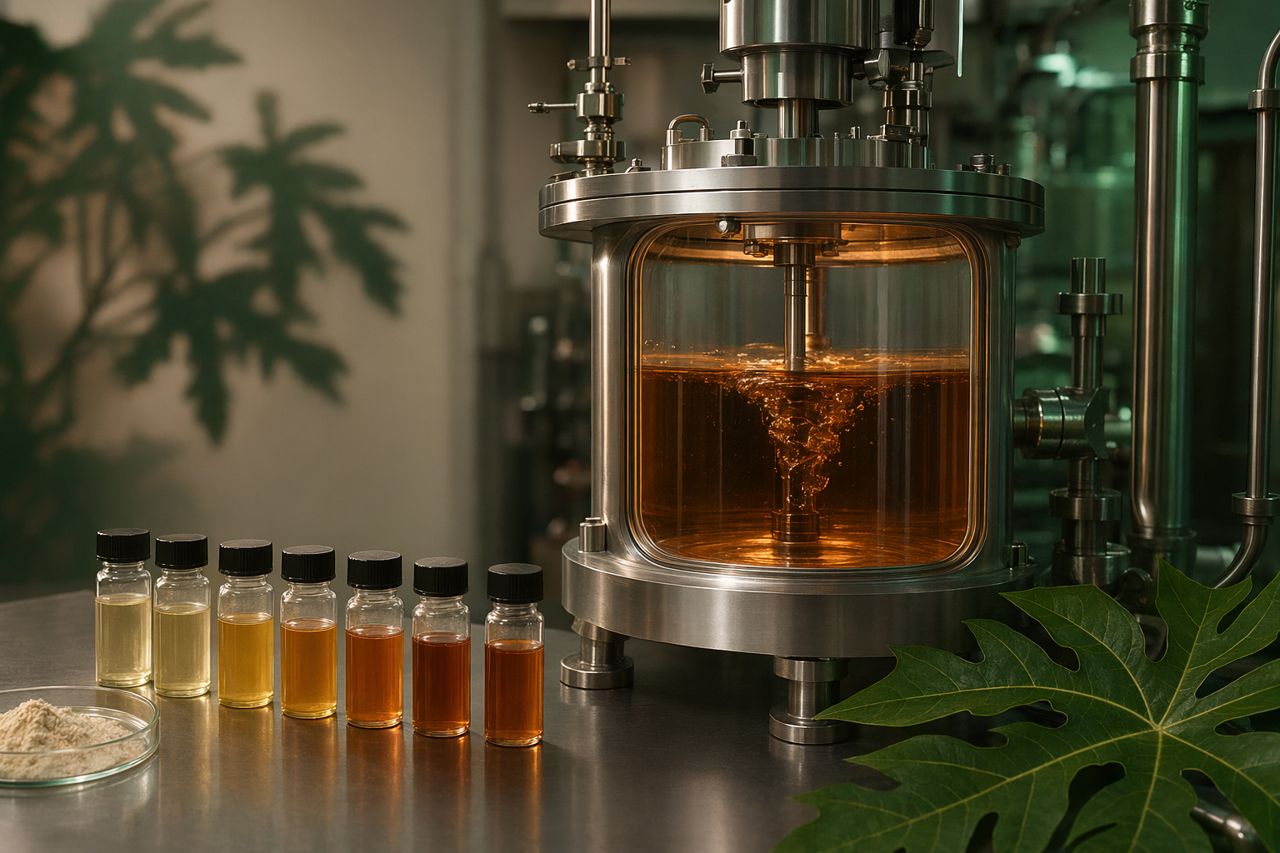
Troubleshooting Papain Processes
Papain is valued because it can convert protein structure into measurable process advantages: faster tenderization, cleaner hydrolysis, improved yield recovery, lower rework, and more consistent sensory outcomes. When a Papain process drifts, however, the symptom often appears in the finished material while the cause sits upstream in handling, dispersion, substrate variation, or endpoint control.
This guide is built for formulation scientists, procurement teams, and process engineers who need a practical diagnostic path without slowing production. Use it to separate raw-material variation from enzyme performance, tighten your trial plan, and define a specification that behaves consistently in your plant.

Start with the symptom, then isolate the variable
Papain troubleshooting is rarely solved by changing addition rate alone. The same addition can perform differently when protein access, pH, temperature, mixing, contact time, salt, fat, or the stop step changes.
| Process symptom | Likely process causes | Practical corrective actions |
|---|---|---|
| Weak tenderization or incomplete hydrolysis | Poor dispersion, short contact time, low substrate accessibility, cold process zone, incompatible pH, degraded material, inhibitory chemicals | Verify storage history, pre-disperse correctly, map actual vessel temperature, extend controlled contact, review sanitation carryover, compare against a retained reference lot |
| Over-soft texture, mushy bite, or excess breakdown | Contact time too long, uneven distribution, delayed heat stop, high local concentration, warm hold before processing | Improve mixing sequence, shorten exposure, define a firmer endpoint, reduce addition within the validated range, confirm the stop step reaches the full mass |
| Bitter or harsh flavor development | Excessive peptide formation, long hold after target conversion, hot spots, unsuitable substrate, inadequate downstream separation | Shorten the reaction window, evaluate a milder process profile, adjust endpoint timing, improve solids separation, run sensory checks at fixed intervals |
| Haze, sediment, or slow filtration | Fine insoluble protein fragments, fat/protein complexes, over-processing, incompatible pH at separation, inadequate clarification | Tighten hydrolysis endpoint, adjust separation pH, improve pre-filtration settling, reduce solids load, review downstream filter aid and centrifuge settings |
| Batch-to-batch inconsistency | Variable protein raw material, particle size drift, inconsistent hydration, weighing sequence changes, unstable storage, non-uniform mixing | Lock the material prep sequence, document substrate origin and heat history, use retained controls, define addition timing, qualify each new lot before scale-up |
| Clumping or uneven enzyme distribution | Dry addition into a high-solids zone, poor wetting, rapid viscosity increase, dead zones in the vessel | Prepare a controlled pre-dispersion, add under active circulation, avoid dumping onto exposed solids, verify impeller performance and fill level |
| Residual proteolysis after the intended stop | Incomplete thermal inactivation, cool vessel zones, delayed cooling/packaging, enzyme protected inside dense substrate | Validate the stop step at the slowest-heating point, increase mixing during heat-up, reduce hold after target conversion, sample from multiple vessel locations |
Build a clean baseline before changing the recipe
A reliable Papain process needs a baseline that captures the enzyme, the substrate, and the vessel conditions together. Before making corrections, record the following:
1. Enzyme handling condition
Papain should be kept sealed, dry, and protected from heat, humidity, and oxidizing chemicals. Open containers, repeated air exposure, or storage near washdown zones can reduce performance before the enzyme reaches the process.
Check:
- Container seal integrity and open-date discipline
- Exposure to warm rooms, steam, or direct sunlight
- Contact with oxidizers, strong sanitation residues, or reactive metals
- Lot transition points and retained reference samples
- Whether the enzyme was blended with salt, carriers, flavors, or other actives before use
2. Substrate readiness
Papain works at the protein interface. Anything that changes access to that interface changes the outcome.
Review:
- Protein source, cut, cultivar, or supplier variation
- Particle size, grind profile, flake thickness, or surface area
- Prior heat treatment or denaturation history
- Salt, fat, sugar, polyphenol, or preservative levels
- Hydration time and water distribution before Papain addition
3. Dispersion and order of addition
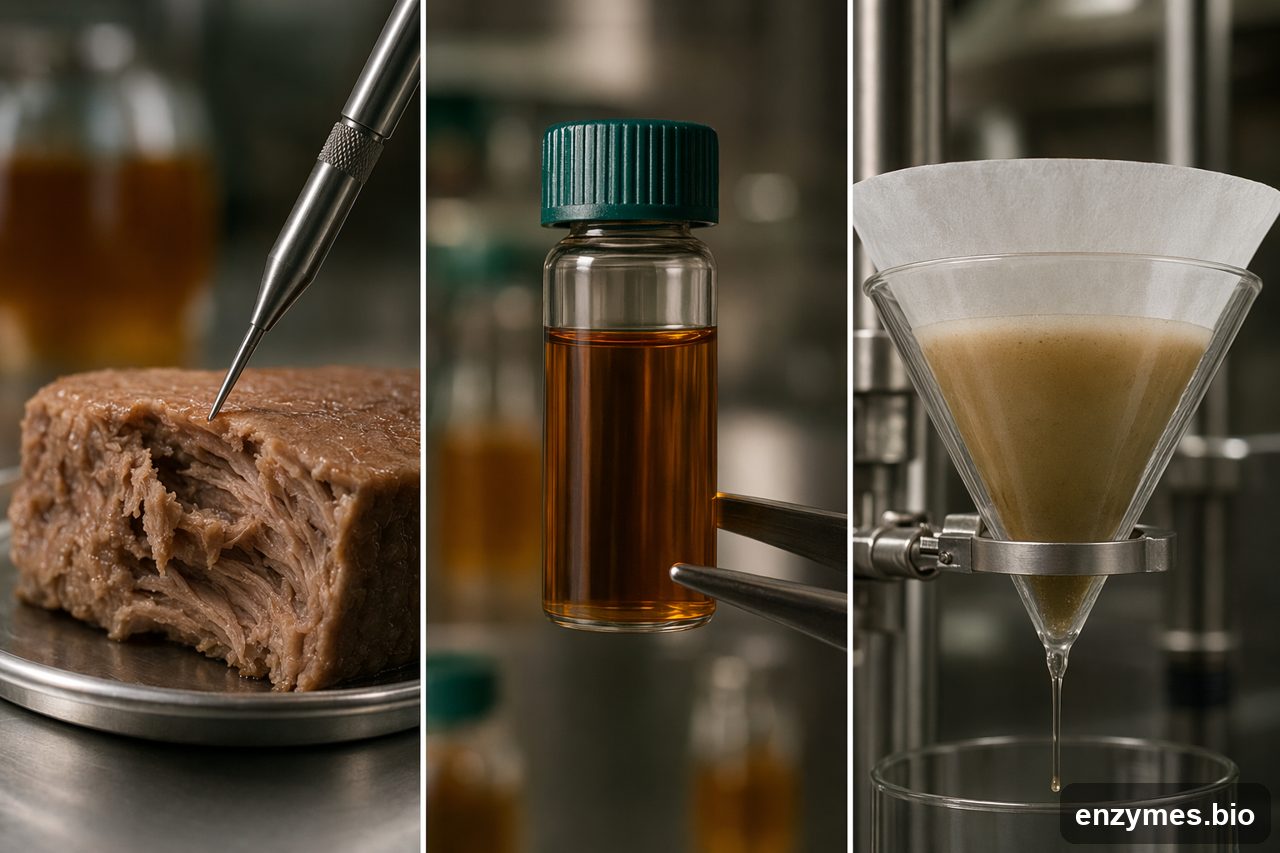
Many underperforming Papain processes are not enzyme failures; they are distribution failures. A small zone of concentrated enzyme can over-process locally while the rest of the batch remains under-treated.
Good practice:
- Pre-disperse Papain in a compatible carrier or process liquid when appropriate
- Add into an actively moving zone, not onto static solids
- Avoid introducing Papain into foam caps, dead zones, or dry ingredient piles
- Confirm the addition point sees full turnover of the vessel contents
- Keep the addition sequence consistent between pilot and production
4. Process window control
Papain is responsive to pH, temperature, contact time, and mixing. These should be treated as a linked process window, not independent switches.
Control points to verify:
- Actual pH of the protein phase, not only the make-up water
- Temperature at the slowest-heating and fastest-heating points
- Contact time from full enzyme dispersion, not from first addition
- Mixing intensity after viscosity changes
- Endpoint definition and stop-step timing
If Papain action is weaker than expected
When conversion is low, resist the immediate urge to increase addition. First determine whether Papain reached the substrate under favorable conditions.
Diagnostic path
- Compare against a retained reference. Run the current lot beside a previously approved lot under identical bench conditions.
- Check dispersion. Look for clumps, floating material, wall deposits, or delayed wet-out.
- Confirm process temperature and pH. Use actual product readings, not only jacket settings or water phase measurements.
- Review inhibitors and carryover. Oxidizing residues, heavy metal traces, and incompatible cleaning chemistry can reduce Papain performance.
- Inspect the substrate. A more heavily heat-treated, fatty, salted, or less hydrated protein matrix can slow access to cleavage sites.
- Validate contact time. Start the clock when Papain is uniformly dispersed and the batch is within the intended process window.
Corrective actions
- Improve wetting and distribution before adjusting addition
- Extend controlled contact time only if sensory and yield targets remain acceptable
- Review water quality and sanitation carryover
- Qualify the raw material lot for protein accessibility
- Tighten receiving criteria for Papain storage condition and packaging integrity
If Papain action is too aggressive
Over-processing can damage texture, reduce sliceability, create excessive drip, or generate harsh peptide notes. This is often an endpoint-control problem rather than a grade-selection problem.
Common causes
- Enzyme added too early in a long hold sequence
- Batch held warm during staging or transfer
- Stop step delayed after target conversion
- Poor mixing creates local over-processing
- Process designed from bench results without scale-up heat-transfer correction
Corrective actions
- Move Papain addition closer to the intended reaction window
- Shorten the controlled exposure time
- Improve the speed and uniformity of the stop step
- Sample from multiple vessel locations before declaring endpoint
- Select a Papain grade with a handling profile better matched to the process if fine control is difficult
If bitterness or sensory defects appear
Papain can improve tenderness and extraction, but excessive or poorly controlled proteolysis may create small peptides associated with bitter or lingering notes. The risk is higher when conversion continues beyond the desired functional endpoint.
What to review
- Whether the sensory defect appears only after holding or storage
- Whether one substrate supplier produces more bitterness than another
- Whether the batch passed the texture target before the official stop point
- Whether separation removes fine protein fragments effectively
- Whether the enzyme is being used to compensate for inconsistent raw material
Corrective actions
- Take timed samples during pilot trials and evaluate texture, soluble solids, clarity, and sensory together
- Stop the process at the first acceptable functional endpoint, not the maximum conversion point
- Reduce warm holding after Papain exposure
- Tighten downstream clarification or centrifugation where fine fragments contribute to flavor drag
- Evaluate whether a different Papain form or process sequence gives a cleaner sensory profile
If filtration, clarity, or separation slows down
Papain can either improve downstream separation or make it more difficult, depending on the protein matrix and endpoint. Over-processing can generate fine material that stays suspended and burdens filters.
Diagnostic checks
- Compare filtration behavior at several earlier endpoints
- Review pH at separation, not only during reaction
- Check whether fat and protein complexes are being stabilized by the process
- Measure whether solids are breaking into fines during aggressive mixing
- Review filter aid, centrifuge residence, and temperature at clarification
Corrective actions
- Stop earlier if fines increase after the target functional endpoint
- Adjust separation conditions to favor aggregate removal
- Reduce shear after the protein structure has opened
- Add a settling or clarification hold if compatible with microbiological and quality limits
- Align Papain specification with the intended separation method, not only the upstream reaction
If batches vary even when the formula is unchanged
A formula can remain constant while the process changes materially. Papain exposes variation in raw protein, moisture, heat history, and mixing geometry.
Variation sources to investigate
- Supplier-to-supplier protein differences
- Seasonal or biological variation in raw material
- Changes in grind, trim, drying, or extraction history
- Different vessel fill levels or agitator loading
- Line operators changing addition order for convenience
- Enzyme containers opened for different lengths of time
Corrective actions
- Establish a controlled pre-production check using the current substrate and Papain lot
- Use a retained Papain reference to separate enzyme drift from substrate drift
- Standardize hydration and addition sequence
- Record vessel fill level and mixing settings as critical process information
- Require procurement and operations to review lot transitions before full-scale changeover
Endpoint control: the difference between useful conversion and damage
For most industrial Papain applications, the best result is not maximum protein breakdown. It is the point where the product reaches the required tenderness, extraction, viscosity, clarity, or yield target without losing structure or sensory quality.
A stronger endpoint program should include:
- A defined start point: when Papain is fully dispersed and conditions are in range
- Timed samples at fixed intervals during development trials
- Functional checks that match the commercial objective
- A confirmed stop step that reaches the full product mass
- Retained samples for texture, clarity, flavor, and yield comparison
- Documentation of deviations, including holds, transfers, and temperature lag
Storage and compatibility checks
Papain is a protein ingredient and should be handled as a performance-sensitive material. Procurement and production teams should align on storage practices before evaluating a new supplier or lot.
Recommended controls:
- Keep containers sealed until use
- Store in a dry, temperature-controlled area away from direct heat
- Avoid exposure to oxidizing chemicals and strong sanitation residues
- Do not leave opened containers in humid production rooms
- Confirm the compatibility of carriers, salts, flavors, acids, and other processing aids before pre-blending
- Use clear lot tracking from receiving through production trial
What to specify when buying Papain for a controlled process
A robust Papain specification is more than a price line. It should reflect the way the enzyme will be stored, dispersed, processed, stopped, and documented.
Useful procurement criteria include:
- Intended application and target outcome
- Physical form and dispersion behavior
- Carrier or excipient requirements
- Food, technical, or specialty compliance needs for the intended market
- Microbiological and contaminant expectations
- Packaging size aligned to batch usage and open-container control
- Shelf-life and storage requirements
- Documentation package required by quality and regulatory teams
- Lot-to-lot consistency expectations and change-notification process
Practical trial plan for a Papain correction
Use a disciplined trial structure rather than broad formula changes.
- Define the problem in operational language. For example: weak bite improvement, slow filtration, bitter finish, high drip, or inconsistent viscosity.
- Lock the substrate. Use the same raw material source, preparation, and hydration profile across comparisons.
- Change one primary variable at a time. Addition level, contact time, temperature profile, pH, and mixing should not all move together.
- Sample at fixed points. Capture early, target, and late-stage outcomes to identify the useful window.
- Confirm the stop step. Validate that the whole batch exits the active window when intended.
- Run retained comparisons. Keep samples from the current standard, corrected process, and any new Papain lot.
- Translate the result into a specification. The winning trial should become receiving, handling, and processing instructions, not just a lab note.
When to change the Papain grade
Change grade when the current material cannot deliver the required process control, not simply because one batch underperformed. A grade review is appropriate when:
- Dispersion remains difficult after process correction
- The reaction window is too narrow for production reality
- Sensory defects appear before the functional target is reached
- Downstream separation is consistently burdened by fines
- Packaging size causes repeated open-container exposure
- Documentation or compliance needs have changed
Papain Enzyme Solutions can help translate the troubleshooting record into a Papain grade brief, commercial specification, and quote request that procurement and technical teams can both use.
Request a Papain quote or technical review
Share the symptom, application, substrate, process window, and target outcome. Papain Enzyme Solutions will review the information and respond with a practical Papain recommendation and pricing path.
Prefer a fast commercial conversation? Use the same form to get pricing for an upcoming Papain trial or production lot.