What Is Papain Enzyme?
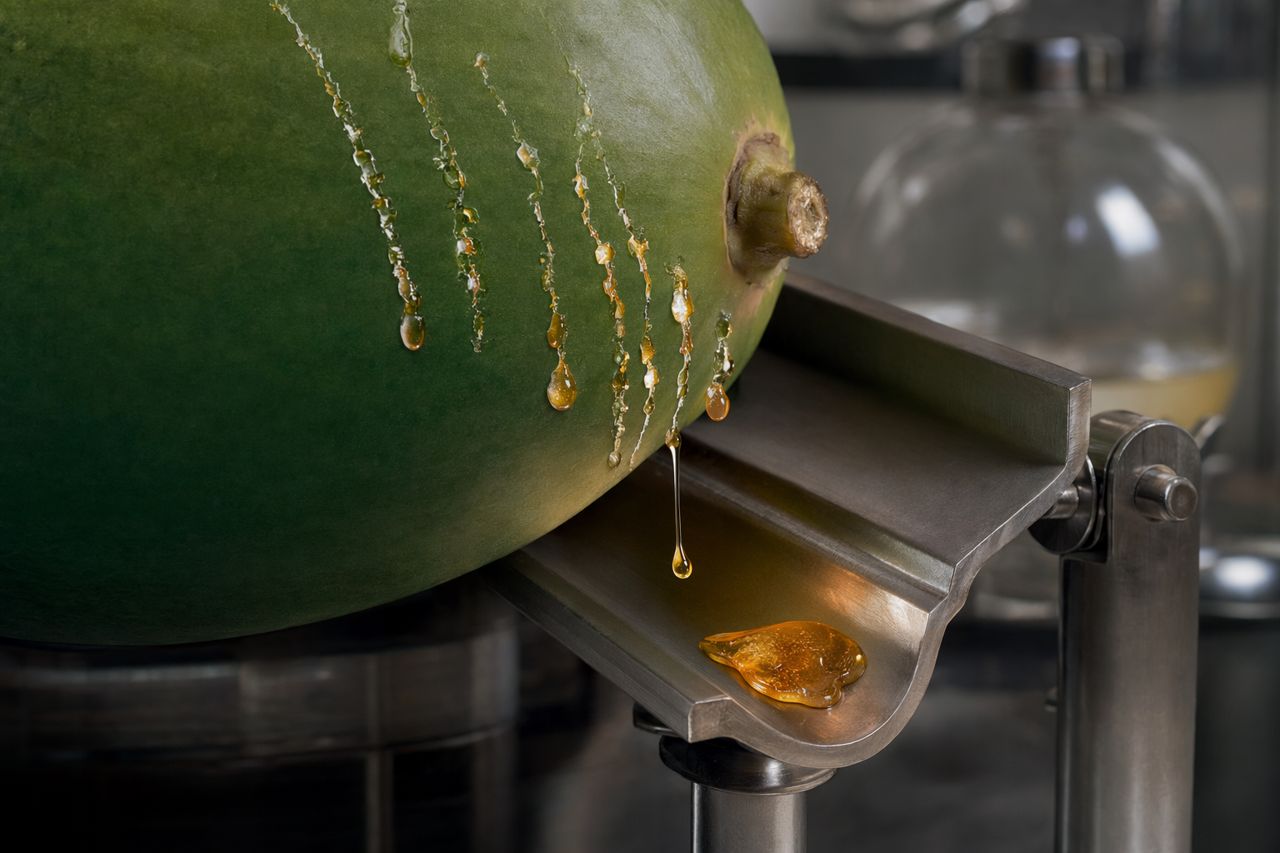
Papain is a plant-derived proteolytic enzyme extracted from papaya latex. In industrial terms, it is a cysteine protease used to break protein chains into smaller peptides and amino-acid fragments under controlled processing conditions.
For formulation scientists, procurement teams, and process engineers, Papain is valued because it can modify texture, improve protein solubility, support clarification, reduce processing friction, and help standardize outcomes across variable biological raw materials.
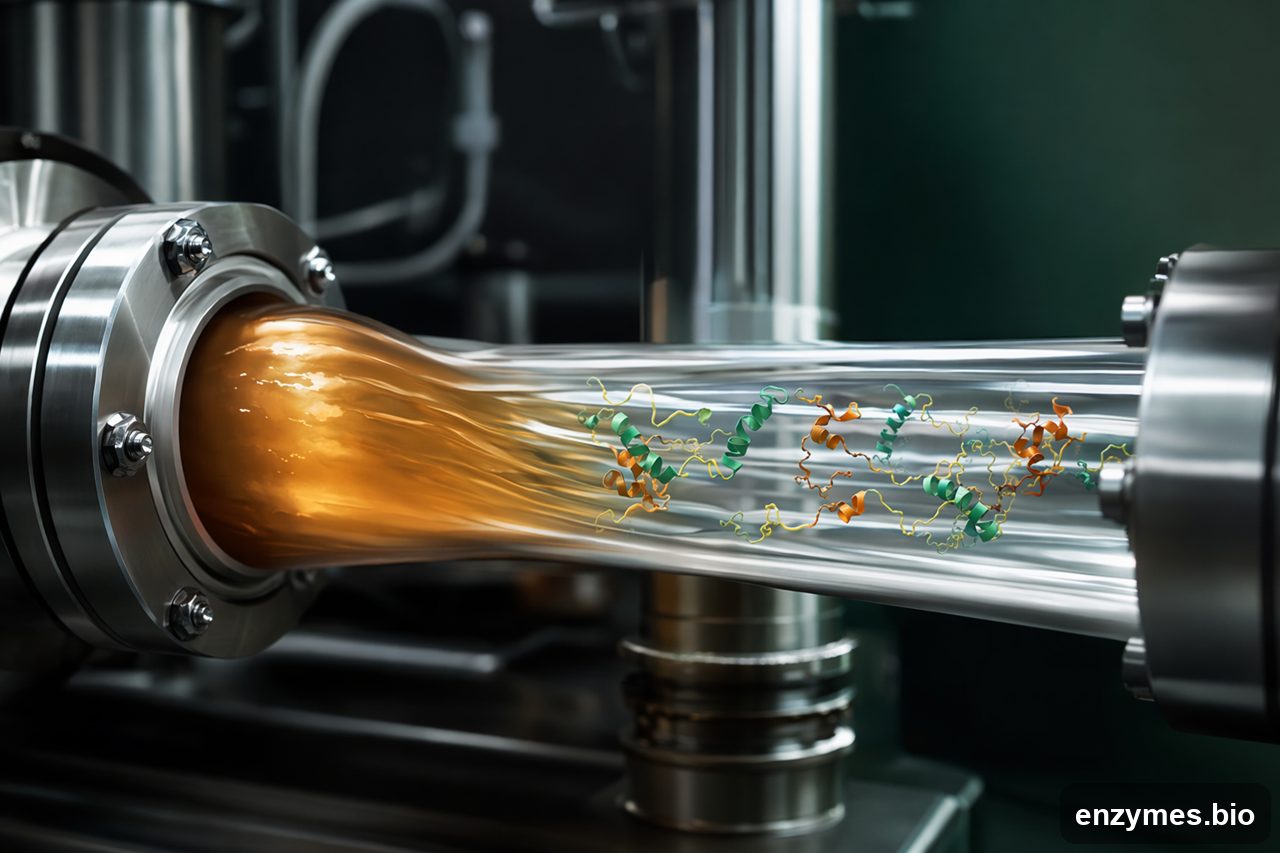
Papain is not a single-use ingredient. It is a process tool: selected, dosed, timed, and inactivated according to the substrate, finished-product target, and regulatory framework of the application.
Buying for a plant or for resale? Papain Enzyme Solutions supplies papain in bulk to manufacturers, distributors and resellers on a quote basis; send the application, quantity and destination. Request a quote.
Papain in one sentence
Papain is a papaya-derived protease that cleaves proteins efficiently, making it useful in food, beverage, nutraceutical, cosmetic, leather, and technical processing where controlled protein breakdown improves performance or product quality.
Where Papain comes from
Papain is traditionally obtained from the latex of unripe papaya fruit. The latex is collected, dried or processed, then refined into commercial enzyme formats suitable for industrial handling.
The commercial value of Papain depends on more than botanical origin. Buyers should evaluate:
- Source traceability and harvest controls
- Consistency between production lots
- Carrier or diluent system, where applicable
- Solubility and dispersion behavior
- Color, odor, and sensory impact
- Microbiological and contaminant controls
- Documentation for the intended market
- Packaging and storage stability
Because Papain is a natural material, supplier control matters. The best sourcing discussions focus not only on price, but also on lot reliability, documentation quality, and fit with the buyer’s process window.
How Papain works
Proteins are long chains of amino acids folded into functional structures. Papain acts by cutting selected peptide bonds within those chains. This controlled cleavage changes how the protein behaves.
Depending on the substrate and process design, Papain may:
- Reduce toughness in muscle proteins
- Increase protein solubility
- Generate peptides for hydrolysates
- Lower viscosity in protein-rich systems
- Assist clarification by modifying haze-forming proteins
- Improve extractability or downstream separation
- Create flavor-active or bioactive peptide fractions
The outcome is not determined by Papain alone. It depends on substrate type, enzyme contact time, temperature profile, pH environment, mixing quality, water availability, and the point at which the enzyme is inactivated.
Where over-hydrolysis becomes a risk
Papain is powerful enough that uncontrolled exposure can reduce quality instead of improving it.
Common over-processing risks include:
- Excessive softening in meat or seafood systems
- Bitter peptide formation in protein hydrolysates
- Loss of elastic structure in formulated foods
- Unwanted thinning or viscosity drop
- Poor bite, weak gels, or shortened texture
- Variability when raw material protein composition changes
For this reason, Papain selection should be connected to process controls: addition point, mixing quality, residence time, temperature ramp, pH window, and the chosen method of stopping or limiting enzymatic action.
How Papain activity is typically controlled in production
In industrial workflows, Papain is controlled through a combination of formulation and process design rather than a single variable.
Addition point
Early addition may improve penetration and contact time. Later addition may give tighter control and reduce unwanted upstream interactions.
Contact time
Residence time determines how far hydrolysis proceeds. Short exposures may modify surface proteins; longer exposures may shift bulk texture, solubility, or yield.
Temperature management
Temperature affects both enzyme rate and substrate structure. It can accelerate hydrolysis, expose protein regions, or, when applied appropriately, help stop the reaction.
pH control
Papain has a practical operating range, but the best target depends on the protein substrate, finished product specification, and downstream processing.
Enzyme deactivation strategy
Where a defined endpoint is required, the process should include a reliable method to reduce or stop Papain action. Thermal treatment, pH shift, dilution, downstream separation, or formulation change may be used depending on the application.
Why industrial buyers specify Papain
Papain is often chosen when a processor needs a botanical protease with broad formulation utility and a clean operational role. It is especially relevant where animal-derived enzymes are not preferred, where plant-origin positioning is useful, or where a moderate-to-robust protein cleavage profile is needed.
Common buying drivers include:
- More consistent texture modification
- Improved yield from protein raw materials
- Better clarity or stability in selected liquid systems
- Shorter or more predictable processing steps
- Enhanced mouthfeel in protein hydrolysates
- Reduced dependence on harsh physical processing
- Flexible compatibility across multiple product lines
Typical applications of Papain
Meat and seafood processing
Papain is widely recognized for tenderization. It acts on muscle proteins and connective structures, helping modify bite, improve chew, and reduce variability in tougher cuts or processed meat systems.
In meat applications, the main technical challenge is control. Excessive hydrolysis can create mushy texture, purge, or inconsistent sensory performance. Process teams usually evaluate application method, contact time, distribution uniformity, and inactivation strategy before scale-up.
Protein hydrolysates
Papain can help convert plant, animal, or marine proteins into hydrolysates used in nutrition, flavor, fermentation, and specialty ingredient systems.
Key development questions include:
- What peptide profile is desired?
- Is bitterness a concern?
- Does the hydrolysate need high solubility?
- Will the finished material be spray-dried, filtered, or blended?
- How will residual enzyme activity be controlled?
Papain can be used alone or as part of a protease blend when a narrower texture, flavor, or solubility target is required.
Beverage and brewing support
In selected beverage systems, Papain can reduce protein-related haze formation by breaking down haze-active proteins. This is relevant where clarity, shelf stability, or filtration behavior is important.
For beverage use, formulation teams should assess whether Papain affects foam, mouthfeel, flavor release, or label requirements. A small change in protein structure can be beneficial for clarity but may influence other sensory attributes.
Bakery, flavor, and savory systems
Papain may be used to adjust dough rheology, improve extractability of proteinaceous raw materials, or generate savory peptide fractions. In flavor systems, the goal is often controlled hydrolysis rather than maximum breakdown.
The best results come from matching Papain to the raw material and desired sensory profile, then stopping the reaction before over-hydrolysis creates bitterness or loss of body.
Nutraceutical and specialty formulations
Papain is also used in digestive enzyme blends and specialty formulations where proteolytic function is desired. In these markets, documentation, ingredient origin, labeling, allergens, contaminants, and regulatory positioning become central sourcing criteria.
Cosmetic, leather, and technical uses
Outside food and nutrition, Papain may support exfoliation, hair or fiber modification, bating, and protein residue management. These applications often prioritize controlled surface action, predictable handling, and compatibility with other processing aids.
Papain compared with other proteases
Papain is one option in a broader protease toolkit. The right choice depends on substrate, label goals, processing conditions, and finished-product requirements.
| Protease type | Typical positioning | Buyer considerations |
|---|---|---|
| Papain | Plant-derived papaya protease with broad industrial utility | Useful for tenderizing, hydrolysis, clarification, and botanical positioning |
| Bromelain | Pineapple-derived plant protease | Often compared with Papain for protein modification and plant-origin claims |
| Ficin | Fig-derived protease | More specialized; sourcing and consistency may be more limited |
| Microbial proteases | Fermentation-derived enzyme systems | Often selected for defined process behavior and scalable supply |
| Animal proteases | Traditional processing enzymes | May face dietary, labeling, or market-positioning constraints |
Papain is frequently selected when a buyer wants a recognizable plant protease with flexible performance across food and technical processes.
Form and handling considerations
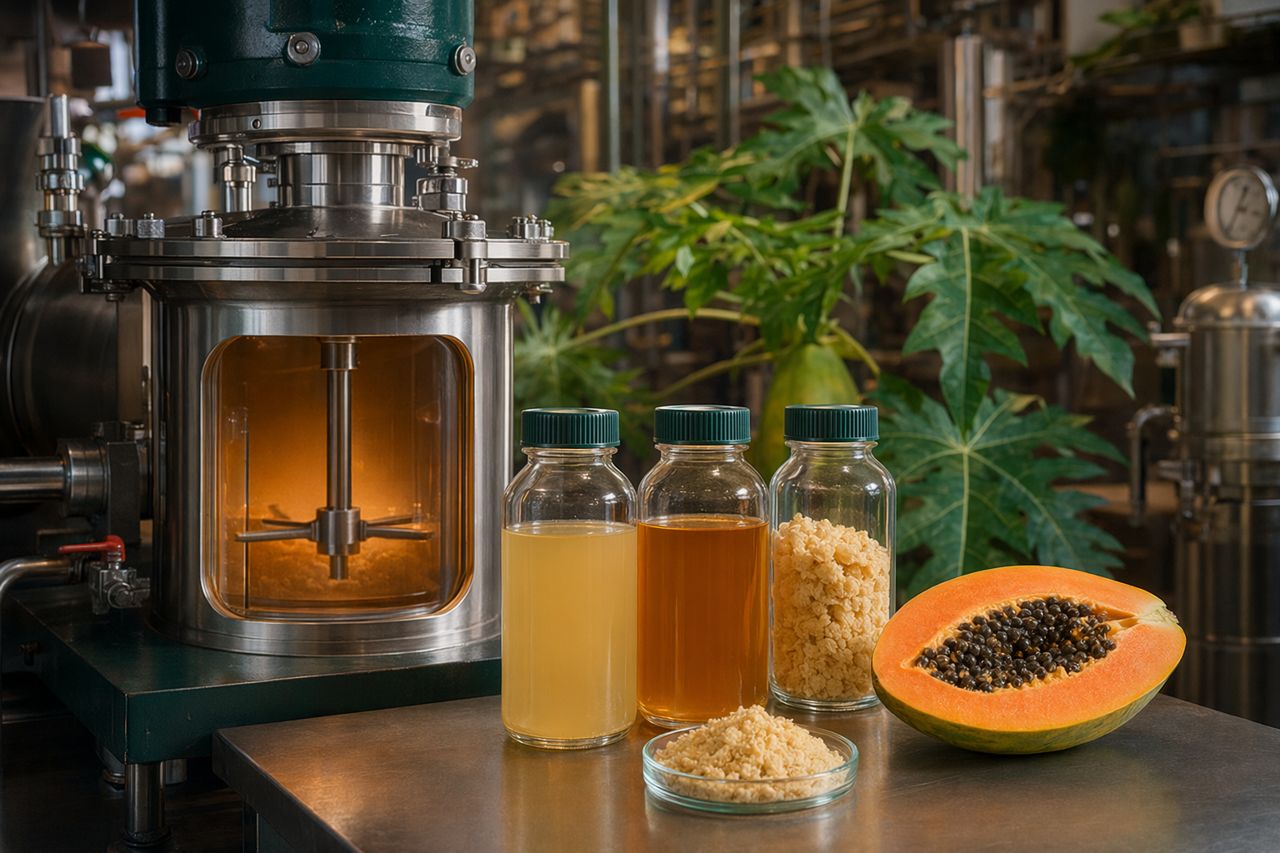
Commercial Papain may be supplied in powder, granulated, or liquid formats depending on the application and supplier capability.
Selection should consider:
- Dust management and operator handling
- Dispersion into the process stream
- Compatibility with existing mixing equipment
- Thermal exposure during processing
- Storage temperature and humidity sensitivity
- Packaging size and batch-use pattern
- Clean-in-place and residue management
As with many enzymes, Papain should be handled as a functional processing aid. Avoid uncontrolled exposure to airborne dust, unnecessary heat, moisture ingress, and cross-contact with incompatible ingredients.
What to request in a Papain specification
A useful industrial Papain specification should give procurement and quality teams enough information to approve, receive, store, and use the material confidently.
Ask for:
- Product form and appearance
- Botanical source declaration
- Ingredient composition, including carriers or stabilizers
- Solubility or dispersion guidance
- Recommended storage conditions
- Shelf-life statement
- Microbiological limits
- Heavy metal and contaminant controls
- Allergen and GMO status, where relevant
- Country-of-origin information
- Food-grade, cosmetic-grade, or technical-grade designation
- Lot traceability and certificate of analysis format
- Available regulatory and quality certifications
For technical trials, also request guidance on application sequence, inactivation conditions, and compatibility with the buyer’s formulation matrix.
Process variables that shape Papain performance
Papain performance is highly process-dependent. Before scale-up, teams should evaluate the following variables in bench and pilot trials:
Substrate type
Different proteins respond differently. Muscle proteins, collagen-rich materials, dairy proteins, plant proteins, yeast proteins, and marine proteins can each produce different hydrolysis patterns.
Contact time
Longer contact is not automatically better. Excessive reaction time can reduce texture integrity, increase bitterness, or complicate downstream separation.
pH and temperature environment
Papain has a practical operating window, but the ideal range depends on the application. Development work should identify the window that delivers the intended effect without damaging sensory or functional quality.
Mixing and distribution
Uneven enzyme distribution can create localized over-processing. This is especially important in meat systems, viscous slurries, and concentrated protein streams.
Inactivation strategy
Papain should be stopped when the desired result is reached. Thermal steps, process sequencing, or formulation conditions may be used to control residual activity, depending on the product and regulatory context.
Common Papain sourcing mistakes
Industrial buyers often run into problems when Papain is treated as a commodity rather than a controlled processing tool.
Avoid these mistakes:
- Comparing offers on headline price only
- Ignoring carrier systems or dilution differences
- Assuming one Papain product will fit every substrate
- Skipping pilot trials before production changeover
- Overlooking sensory impact in hydrolysates
- Failing to define inactivation requirements
- Accepting incomplete quality documentation
- Not aligning packaging size with batch consumption
A well-specified Papain program usually reduces rework, improves repeatability, and gives production teams clearer control over finished-product attributes.
Is Papain right for your application?
Papain is a strong candidate when the goal is controlled protein modification using a plant-derived enzyme. It is especially useful when the application needs a balance of effective cleavage, formulation flexibility, and practical sourcing.
It may not be the best choice when the process requires a highly narrow cleavage pattern, strict sensory neutrality, or conditions outside Papain’s practical operating range. In those cases, another protease or a blended enzyme system may be more appropriate.
Buyer checklist
Before requesting commercial pricing, define:
- Target application and substrate
- Desired technical outcome
- Process stage where Papain will be added
- Expected contact time and inactivation point
- Finished-product labeling requirements
- Required documentation and certifications
- Preferred form: powder, granulate, or liquid
- Estimated annual and batch-level demand
- Packaging and storage constraints
- Trial quantity and scale-up timeline
Clear input helps the supplier recommend a Papain format that fits the actual process rather than a generic catalog description.
Request a wholesale quote
We supply papain for food, beverage, protein, cosmetic and technical processing in bulk to manufacturers, distributors and resellers, on a quote-only basis. To get a recommendation and a price, send: the product or application, the quantity (trial lot, monthly or annual), the destination country, and the process step where the papain will be used. Format (powder or liquid) and pack size are quoted per order; tell us your preference if you have one.