Papain in Food Processing: Buyer FAQ
Papain is a plant-derived cysteine protease sourced from papaya latex and used across food manufacturing where controlled protein modification improves texture, yield, clarity, processing speed, or sensory quality. This FAQ is written for formulation scientists, procurement teams, QA managers, and process engineers evaluating Papain for industrial food applications.
What is Papain?
Papain is a proteolytic enzyme that cleaves peptide bonds in proteins. In food processing, that means it can soften muscle fibers, reduce protein viscosity, create hydrolysates, improve extractability, support clarification, and modify dough or protein matrices when used under controlled conditions.

Papain is valued because it is:
- Botanical in origin: derived from papaya latex.
- Broadly useful: active across a practical range of food-processing conditions.
- Process-friendly: compatible with many batch, soak, injection, hydrolysis, and clarification workflows.
- Sensory-relevant: capable of changing tenderness, mouthfeel, and soluble peptide profile.
- Scalable: suitable for pilot validation and industrial production when specification, handling, and inactivation are well managed.
Why do food manufacturers use Papain?
Manufacturers typically choose Papain when they need controlled protein breakdown without redesigning the entire process. Common goals include:
- More consistent tenderness in meat and seafood systems.
- Faster protein solubilization for hydrolysates, sauces, seasonings, and nutritional ingredients.
- Improved filtration and reduced haze risk in certain beverage processes.
- Modified dough handling or protein relaxation in selected bakery applications.
- Better utilization of protein-rich raw materials.
- Reduced variability caused by inconsistent raw material structure.
The commercial value is rarely the enzyme alone. It is the combination of yield, throughput, sensory consistency, and fewer out-of-spec batches.
Which food applications commonly use Papain?
Meat tenderization
Papain helps break down structural proteins in meat. It may be used in marinades, brines, injection systems, tumbling processes, surface treatments, or prepared meat formulations. The key control points are contact time, temperature, distribution, and inactivation.
Protein hydrolysis
Papain can generate soluble peptides from animal, plant, or mixed protein substrates. It is used where manufacturers want improved solubility, digestibility, savory profile, viscosity reduction, or functional peptide development. Final flavor depends on substrate, hydrolysis endpoint, and downstream treatment.
Brewing and beverages
In selected beverage processes, Papain may assist with protein haze management and clarification strategies. Compatibility must be validated against the beverage matrix, filtration method, stabilization program, and label requirements.
Bakery and cereal systems
Papain can modify protein structure where softer dough handling, reduced elasticity, or controlled relaxation is required. Because small process differences can change dough behavior, bakery use should be validated through side-by-side trials.
Seafood and specialty proteins
Papain may support texture management, shellfish processing, extract production, or hydrolysate development. As with meat, over-processing can damage bite, yield, or appearance, so endpoint control matters.
How does Papain affect texture?
Papain reduces protein structure by cleaving peptide bonds. In a meat system, this can improve tenderness by weakening connective and muscle protein networks. In a hydrolysate, it can reduce viscosity and increase soluble nitrogen fractions. In dough or plant protein systems, it can soften or relax the matrix.
The effect is highly dependent on:
- Raw material type and protein composition.
- Particle size, surface area, or injection uniformity.
- Temperature and process residence time.
- pH and salt conditions.
- Mixing intensity and enzyme distribution.
- Inactivation method and timing.
Good Papain use is not simply “more enzyme.” It is controlled exposure.
What are the main process variables to evaluate?
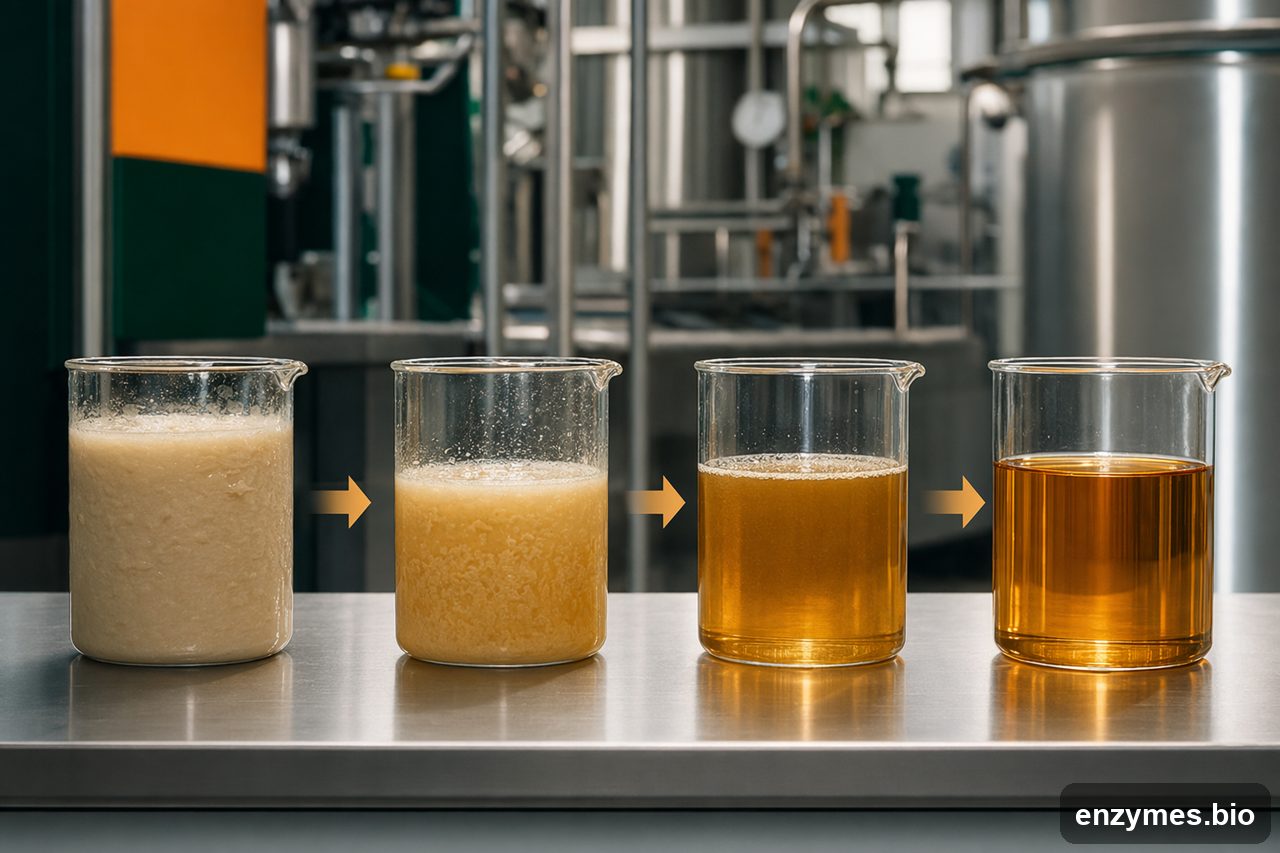
For industrial validation, map Papain performance around the actual plant process rather than only a laboratory ideal. Key variables include:
- Substrate: species, cut, protein source, freshness, fat content, collagen level, and prior heat history.
- pH: Papain performs best in suitable pH windows; extreme conditions reduce effectiveness or change selectivity.
- Temperature: warmer conditions often accelerate proteolysis, but they also increase the risk of oversoftening if residence time is not controlled.
- Time: endpoint control is essential for texture and flavor consistency.
- Distribution: poor dispersion causes uneven tenderization or inconsistent hydrolysis.
- Inactivation: heat treatment, pH shift, or other validated process steps may be used to stop further proteolysis.
- Downstream operations: filtration, drying, cooking, retorting, pasteurization, or packaging can change the final result.
How do I prevent over-tenderization or bitterness?
Over-tenderization occurs when Papain exposure continues beyond the intended endpoint or is unevenly distributed. Bitterness can develop in hydrolysates when peptide profiles are not matched to the sensory target.
Control strategies include:
- Define a measurable endpoint before scale-up.
- Use controlled addition and mixing procedures.
- Validate time and temperature under plant conditions.
- Build in an inactivation step where the final product requires stability.
- Run sensory panels alongside texture or viscosity measurements.
- Compare multiple addition points rather than assuming one is correct.
- Document hold-time limits during line stoppages or rework scenarios.
Is Papain suitable for clean-label or plant-derived positioning?
Papain is plant-derived, which can support certain formulation and sourcing narratives. However, “clean label,” “natural,” allergen, vegetarian, vegan, organic, halal, kosher, and non-GMO claims depend on the complete product specification, carrier system, processing aids, local regulation, and certification package.
Before making claims, request documentation for:
- Source material and processing aid status.
- Carrier or diluent composition.
- Allergen statement.
- GMO position statement where relevant.
- Halal or kosher certificate if required.
- Country-specific regulatory suitability.
- Labeling guidance for the intended market.
What documentation should procurement request?
A food-grade Papain supplier should be able to provide a clear technical and quality file. Typical documents include:
- Product specification sheet.
- Certificate of analysis for each lot.
- Food-grade statement.
- Safety data sheet.
- Allergen statement.
- GMO position statement, where applicable.
- Heavy metals and microbiological limits.
- Country of origin or manufacturing origin information.
- Halal, kosher, or other certificates when available.
- Shelf-life and storage guidance.
- Packaging and palletization details.
For recurring production, procurement should also ask how lot-to-lot consistency is managed and what change-notification policy applies.
Powder or liquid Papain: which format is better?
Both formats can work. The right choice depends on your process equipment, handling constraints, and stability requirements.
Powder Papain
Best when manufacturers need compact storage, flexible blending, dry premix compatibility, or longer inventory planning. Dust control and operator protection must be considered because protease powders can irritate skin, eyes, and the respiratory tract.
Liquid Papain
Useful when the process benefits from metered dosing, rapid dispersion, closed handling, or reduced airborne dust. Liquid formats may require tighter storage control and compatibility checks with preservatives, pH, and the final food matrix.
What should QA watch during incoming inspection?
Incoming inspection should confirm that the lot matches the approved specification and application need. QA teams commonly review:
- Lot identity and traceability.
- Appearance and physical form.
- Odor profile, if relevant to the specification.
- Moisture or stability-related criteria.
- Microbiological status.
- Heavy metal limits.
- Packaging integrity.
- Shelf-life remaining.
- Documentation completeness.
For critical processes, retain reference samples and track lot performance in finished-product metrics such as tenderness, filtration rate, viscosity, soluble solids, or sensory profile.
How is Papain typically stored and handled?
Follow the supplier specification, but common handling principles include:
- Store sealed in a cool, dry area away from direct heat and humidity.
- Avoid repeated opening of bulk containers in uncontrolled environments.
- Use clean, dry tools for powder handling.
- Minimize dust formation during transfer.
- Keep containers tightly closed after use.
- Use appropriate PPE for protease handling.
- Segregate enzyme handling from sensitive finished-product areas where needed.
Because Papain is a protein catalyst, exposure to heat, moisture, incompatible chemicals, or prolonged poor storage can reduce performance.
What safety considerations matter in the plant?
Papain is widely used in food processing, but concentrated enzyme preparations require professional handling. Proteases may cause irritation or sensitization if inhaled or contacted repeatedly.
Plant-level controls may include:
- Closed transfer or local extraction where practical.
- Dust-minimizing procedures for powders.
- Eye and skin protection.
- Respiratory protection where risk assessment requires it.
- Employee training for enzyme handling.
- Spill procedures that avoid aerosol generation.
- Clear separation between enzyme weighing and open product zones.
Always follow the product safety data sheet and local occupational safety requirements.
How should a manufacturer run a Papain trial?
A practical trial plan should connect enzyme use to business outcomes. Suggested sequence:
- Define the target: tenderness, viscosity, solubility, filtration, yield, flavor, or process time.
- Select the format: powder, liquid, granulated, or premix-compatible option.
- Map the process: addition point, mixing, residence time, temperature, pH, and downstream heat step.
- Run a small matrix: compare exposure conditions and endpoints rather than changing only one variable.
- Measure finished-product effects: texture, sensory profile, soluble fraction, haze, yield, cook loss, or filtration behavior.
- Stress-test line realities: hold times, start-stop events, raw material variability, and sanitation cycles.
- Lock the control plan: receiving specs, handling SOPs, dosing instructions, inactivation, and QC release criteria.
What questions should buyers ask before approving a supplier?
Use these questions to separate commodity offers from production-ready supply:
- What is the source and processing route of the Papain?
- Which food-grade documentation is available by lot?
- What physical formats can be supplied?
- How is batch consistency controlled?
- What carriers, stabilizers, or processing aids are present?
- What is the recommended storage condition and shelf life?
- Can the supplier support pilot trials and scale-up troubleshooting?
- What is the standard lead time and minimum order structure?
- What packaging sizes are available for plant handling?
- How are changes in specification, origin, or manufacturing process communicated?
What causes poor Papain performance?
If performance is inconsistent, the cause is often process-related rather than simply enzyme-related. Common issues include:
- Inadequate mixing or uneven distribution.
- Excessive hold time before cooking or inactivation.
- Temperature drift during marination or hydrolysis.
- pH outside the intended operating window.
- Raw material variation between lots or seasons.
- Enzyme degradation due to poor storage.
- Incompatibility with oxidizing agents or harsh cleaning residues.
- Insufficient validation of the final heat step.
A well-designed troubleshooting review should compare enzyme lot records, raw material data, and plant process logs.
Can Papain replace other proteases?
Sometimes, but not automatically. Papain has a broad proteolytic profile and can be an effective alternative or complement to other proteases. Replacement decisions should be based on finished-product performance, not only procurement cost.
Compare:
- Texture curve and endpoint control.
- Flavor and bitterness risk.
- Compatibility with the production pH and temperature profile.
- Inactivation behavior.
- Label and regulatory position.
- Supply reliability and documentation package.
- Total process cost, including yield and rework impact.
What does a strong Papain specification include?
For B2B purchasing, a strong specification should define more than a product name. It should include:
- Enzyme identity and source.
- Physical form and appearance.
- Food-grade status.
- Carrier or diluent information.
- Performance standardization approach without exposing confidential assay detail.
- Microbiological and heavy metal limits.
- Packaging format.
- Storage and shelf-life guidance.
- Documentation required per shipment.
- Change-notification expectations.
The goal is to make Papain performance repeatable across plants, operators, and purchasing cycles.
Request Papain pricing or technical fit guidance
If you are evaluating Papain for a food-processing application, share the product type, process conditions, target outcome, preferred format, and annual volume range. Our team can help identify the most suitable specification and quote structure.